Recovering Your Payment When a Chinese Supplier Fails to Deliver: CISG Remedies & Chinese Court Practice
You wired payment to a Chinese supplier on Alibaba.com. The delivery deadline passed. Weeks turned into months. The supplier made excuses, then stopped responding. This article explains the legal remedies available to foreign buyers under the CISG and Chinese law when a Chinese supplier fails to deliver, illustrated by a real Shenzhen court case in which an Italian buyer recovered over US$100,000.
This article explains the legal remedies available to foreign buyers under the CISG and Chinese law when a Chinese supplier fails to deliver, illustrated by a real Shenzhen court case in which an Italian buyer recovered over US$100,000.
Case Study: Italian Buyer v. Shenzhen Supplier
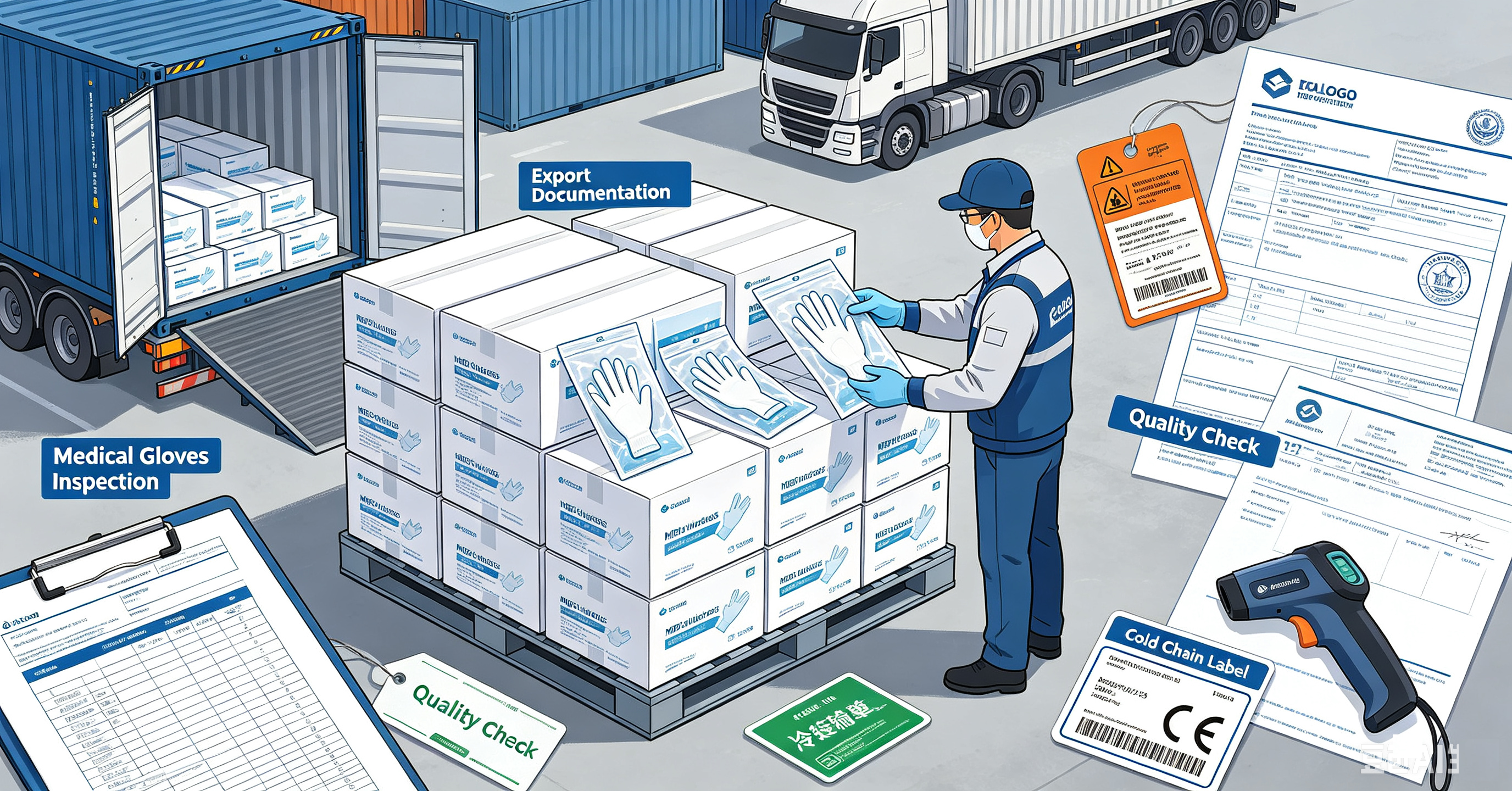
In August 2020, an Italian company signed a Purchase Contract with a Shenzhen cultural communication company to buy 36,000 boxes of nitrile examination gloves for US$250,200, payable in full before delivery. The delivery deadline was 5 days after receipt of payment. The Italian buyer wired the full amount.
The supplier shipped nothing. After the buyer demanded delivery and then demanded a refund, the supplier returned approximately US$147,000 in September 2020 but kept the remaining US$102,963.39. The supplier argued that the real contracting party was not the Shenzhen company but a four-person team (including the sole shareholder) that had "borrowed" the company's name to sign the contract. The supplier also argued that the parties had negotiated a partial settlement in goods and that the contract was therefore not terminated.
The case went to the Shenzhen Qianhai Cooperation Zone People's Court at first instance, and then to the Shenzhen Intermediate People's Court on appeal. Both courts ruled in favour of the Italian buyer. The final judgment: full refund of US$102,963.39 plus interest at 3.85% per annum from September 2020, with the company's sole shareholder jointly and severally liable ((2023) Yue 03 Min Zhong No. 36761).
Legal Principles the Case Established
1. Contractual Privity: Who Signs Is Who Is Liable
The Shenzhen company argued that the "real" counterparty was a four-person team, not the company itself. The court rejected this. The contract was signed by the company. The company is the counterparty. Internal arrangements between shareholders, agents, or team members do not change the identity of the contracting party. This is the principle of contractual privity—fundamental in both Chinese law and the CISG.
For foreign buyers: This is powerful protection. You do not need to investigate the supplier's internal partnerships, agency arrangements, or shareholder agreements. If the contract bears the company's name and seal, that company is liable. If the company's employee or agent signed, the company is still liable (PRC Civil Code Article 170).
2. Fundamental Breach: No Delivery = Contract Can Be Terminated
CISG Article 49 provides that the buyer may declare the contract avoided if the seller's failure to perform amounts to a fundamental breach—one that substantially deprives the buyer of what they were entitled to expect under the contract. Complete failure to deliver goods after full payment is the clearest possible case of fundamental breach.
The Shenzhen court held that the Italian buyer's demand for return of the remaining payment constituted a valid declaration of avoidance. The fact that the parties had previously discussed a potential partial settlement in goods did not prevent the buyer from exercising its right to avoid the contract, because no alternative arrangement was ever performed.
3. Refund Must Include Interest from Date of Payment
CISG Article 84(1) is explicit: if the seller is bound to refund the price, it must also pay interest from the date on which the price was paid. This is not discretionary. It is not dependent on the contract containing an interest clause. It is an automatic obligation.
In the Shenzhen case, the court applied an interest rate of 3.85% per annum (the Loan Prime Rate at the time), calculated from the date the supplier retained the remaining funds after making a partial refund. Over the three-plus years the case took to resolve, this added a significant sum.
4. One-Person Company: Shareholder Is Personally Liable by Default
Under Chinese company law, the shareholder of a one-person limited liability company bears the burden of proving that their personal assets are separate from company assets. If they cannot—and in practice, many cannot—they are personally liable for company debts. The Shenzhen court applied this rule to hold the sole shareholder of the supplier company jointly and severally liable for the full judgment amount.
For foreign buyers: If the supplier is a one-person company, you can name the shareholder as a co-defendant. This significantly increases the pool of assets available for enforcement and prevents the shareholder from hiding behind the corporate form.
How to Apply This to Your Case
Step 1: Identify Who You Paid and Who Signed
Gather the contract, Proforma Invoice, and bank transfer records. The legal entity named as the seller in the contract is your primary defendant. Check: is the bank account beneficiary the same entity as the contracting party? If the payment went to a different entity (e.g., a Hong Kong company while the contract is with a Shenzhen company), you may need to sue both.
Step 2: Send a Formal Demand for Refund
Before suing, send a formal written demand (preferably through a Chinese lawyer) stating that the supplier is in fundamental breach, that you are declaring the contract avoided, and that you demand return of the full purchase price plus interest within a specified period (e.g., 14 days). This demand letter serves multiple purposes: it satisfies the avoidance requirement under CISG, it creates a clear record of your position, and it often prompts a settlement response from suppliers who wish to avoid litigation.
Step 3: Apply for Property Preservation
If you can identify the supplier's bank account, factory, or other assets in China, the court can freeze those assets at the outset of the lawsuit (property preservation, or 财产保全). This prevents the supplier from dissipating assets while the case proceeds. In many cases, the freezing order alone is enough to bring the supplier to the negotiating table. You will typically need to provide a guarantee (cash deposit or insurance bond) to secure the preservation order.
Step 4: Sue for Full Recovery Plus Interest
Your claim should include: (a) the outstanding principal, (b) interest from the date of payment at the applicable rate (typically the LPR plus a margin, or a rate the court considers reasonable), (c) litigation costs and legal fees where recoverable, and (d) if the supplier is a one-person company, a claim against the shareholder personally.
What If the Supplier Has No Assets?
This is the hard case. If the supplier company is a shell with no registered capital, no bank balance, and no physical assets, a judgment may be unenforceable. This is why due diligence before payment is so important. Before wiring large sums, verify the supplier's registered capital, business history, and litigation record. A Chinese lawyer can conduct this check quickly and inexpensively.
For more on due diligence and enforcement strategy, see our 4-step enforcement framework and What to do when your Chinese supplier disappears after payment.
This article is general information only, not legal advice for your matter. For professional assistance, consult a PRC-licensed lawyer at Zhang&Partners.