How to Enforce Your Rights Against a Chinese Supplier: A 4-Step Framework
When a Chinese supplier fails to deliver goods or ships products that don’t match what you ordered, the instinct is often to act immediately—contact the police, complain to the platform, or call the embassy. But random action rarely produces results. What works is a systematic, evidence-based approach. This article presents a 4-step framework that our firm uses when assisting foreign buyers in disputes with Chinese suppliers on Alibaba.com and other B2B platforms.
This article presents a 4-step framework that our firm uses when assisting foreign buyers in disputes with Chinese suppliers on Alibaba.com and other B2B platforms. Work through these steps in order before deciding on a course of action.
Step 1: Identify the Real Counterparty
It sounds obvious—you paid them, so you must know who they are. But many buyers do not actually know the legal entity behind the supplier they dealt with. This is the single most common mistake we see, and it can make enforcement impossible.
Check Whether the Payee Matches the Contracting Party
Some Chinese suppliers use offshore accounts (Hong Kong, Singapore, or other jurisdictions) to receive payments. The entity that received your money may not be the same as the Chinese company you negotiated with. If an offshore entity holds the funds, enforcing through Chinese courts becomes more complex—you may need to pursue the offshore entity or establish that the Chinese company was the true beneficiary.
Map the Corporate Structure
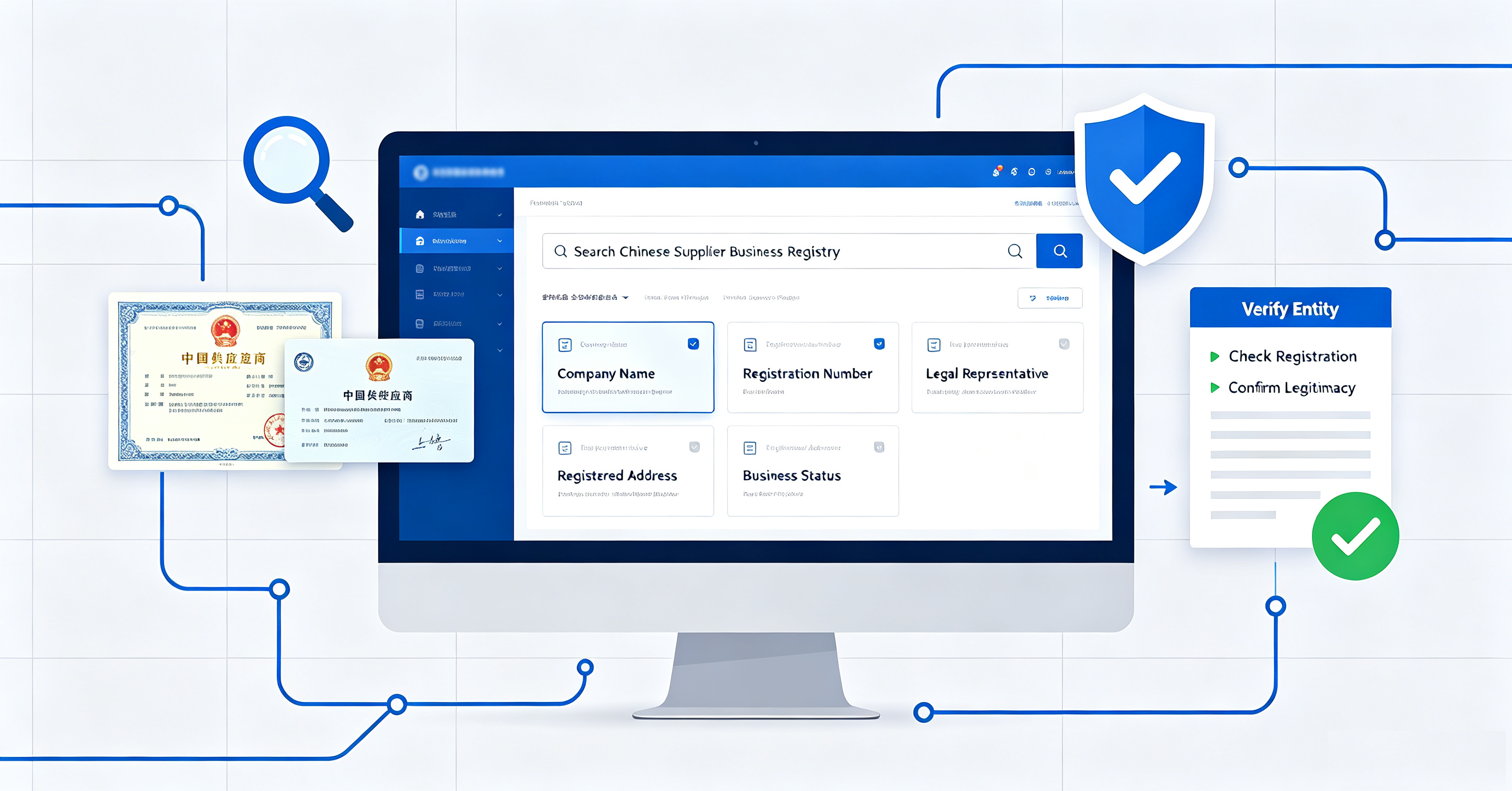
Identify the supplier's legal representative, shareholders, and affiliated companies. On Alibaba.com, check the supplier's "Company Profile" section, where many sellers display their business licence. Cross-reference this against the National Enterprise Credit Information Publicity System (国家企业信用信息公示系统). Ask: is this a one-person company? Who are the shareholders? What is the registered capital? These details determine who you can sue and whether you can pursue individuals, not just a shell company.
Step 2: Investigate the Supplier's Operating Status
Before deciding on a strategy, determine whether the supplier is still actively doing business. This single factor often dictates whether negotiation or litigation is the better path.
Is the Supplier Still Operating?
Check these indicators:
- Platform activity: Is the supplier still listing products on Alibaba.com, Made-in-China, Global Sources, or other B2B platforms? Is their company website still active and being updated?
- Trade fair presence: Have they exhibited at the Canton Fair or other industry events recently?
- Social media: Are they active on LinkedIn, Facebook, or industry forums?
Why This Matters
If the supplier is still actively trading, they have something to lose: their platform account, their reputation at trade fairs, their search rankings. This gives you leverage. A formal lawyer's demand letter, combined with the credible threat of litigation and the risk of platform complaints, can often produce a settlement without going to court.
If the supplier has stopped operating, negotiation has less power. You may need to proceed directly to litigation, but only if the supplier still has identifiable assets that can be frozen and enforced against. A lawyer can help assess this through asset tracing.
Step 3: Build a Complete Evidence Chain
Evidence is the foundation of any claim. Different types of disputes require different evidence, and gaps in the chain are the most common reason claims fail.
For Non-Delivery Claims
Non-delivery cases are relatively straightforward. You need: proof of payment (bank transfer records), the contract or Proforma Invoice showing the delivery deadline, and correspondence showing you demanded delivery. The key risk is the supplier arguing that delivery was made—if a false tracking number was provided, document your efforts to verify it.
For Quality or Non-Conformity Claims
Quality disputes are harder because you must prove two things: (a) that the goods are defective or non-conforming, and (b) that the defective goods you are showing are the same goods the supplier shipped. Closing this chain requires:
- Contractual quality standards: Did the contract specify a standard? Without agreed standards, you must rely on general legal principles—goods must be fit for their ordinary purpose under CISG Article 35.
- Third-party inspection reports: Independent inspection by SGS, Bureau Veritas, or a similar agency carries far more weight than your own photos or descriptions. Where possible, have the inspection conducted at the port of arrival, before the goods leave customs control.
- Chain of custody evidence: Transport documents (bill of lading, container number, seal number), customs declarations, batch numbers, and packaging labels that link the defective goods to the specific shipment from the supplier.
- Container weight records: If the supplier claims to have shipped a full container but the customs weighbridge shows a discrepancy, this can be powerful evidence of short-shipment.
For Quantity Shortage Claims
Evidence of short delivery works best when documented at the point of receipt: weighbridge records before the container is opened, third-party tally reports, and photographs of the container seal intact. Once the container is opened and goods are moved, proving a shortage becomes much harder—the supplier can argue goods were removed after delivery.
Step 4: Choose Your Strategy
Option A: Negotiation and Commercial Pressure
Best for: Smaller amounts (under ~US$20,000), cases with imperfect evidence, or suppliers still actively trading.
A lawyer's demand letter sent to the supplier's registered address and through platform messaging often produces results when the supplier has ongoing business interests to protect. Suppliers active on Alibaba.com fear platform complaints and account suspension. Use this leverage. Many disputes settle at this stage.
Option B: Litigation in Chinese Courts
Best for: Larger amounts (over ~US$20,000–30,000), cases with strong evidence, and suppliers with identifiable assets in China.
Chinese courts offer effective remedies for international sale of goods disputes, applying the CISG and the PRC Civil Code. Key advantages:
- Property preservation (asset freezing) at the outset of litigation prevents the supplier from moving assets.
- Full refund plus interest from the date of payment (CISG Article 84).
- Lost profits on downstream resale contracts (CISG Article 74).
- Shareholder piercing: One-person company shareholders are personally liable unless they prove separation of assets.
For a detailed case study, see our 4-step guide to recovering losses from China suppliers.
Option C: Criminal Complaint
Best for: Clear cases of fraud where the supplier never intended to deliver and multiple victims exist.
A criminal complaint to the Chinese Public Security Bureau (PSB) is an option but not a primary strategy. Police are more likely to act when: the amount is substantial, there are multiple victims, and there is clear evidence of fraudulent intent (not merely a contract dispute). The foreign buyer appearing in person to file the complaint often increases the chance it will be taken seriously. However, if the supplier made any effort to perform—shipping partial goods or communicating about delays—police will typically treat the matter as civil and decline to open a case.
Conclusion: Act Systematically, Not Emotionally
The foreign buyers who recover their money are not necessarily those with the strongest case on paper. They are the ones who follow a systematic process: identify the real counterparty, investigate whether they are still operating, build a complete evidence chain, and then select the strategy that fits the facts. Impulsive action—angry emails, premature police reports, public complaints—often makes things worse by destroying leverage or alerting the supplier to hide assets.
If you are in a dispute with a Chinese supplier, contact Zhang&Partners. We can conduct a corporate background check, assess the strength of your legal position, and advise on the most effective strategy—in clear English, with deep knowledge of Chinese law and practice.
This article is general information only, not legal advice for your matter. For professional assistance, consult a PRC-licensed lawyer at Zhang&Partners.