Foreign Litigants in China: A Strategic Q&A Guide to Court Proceedings
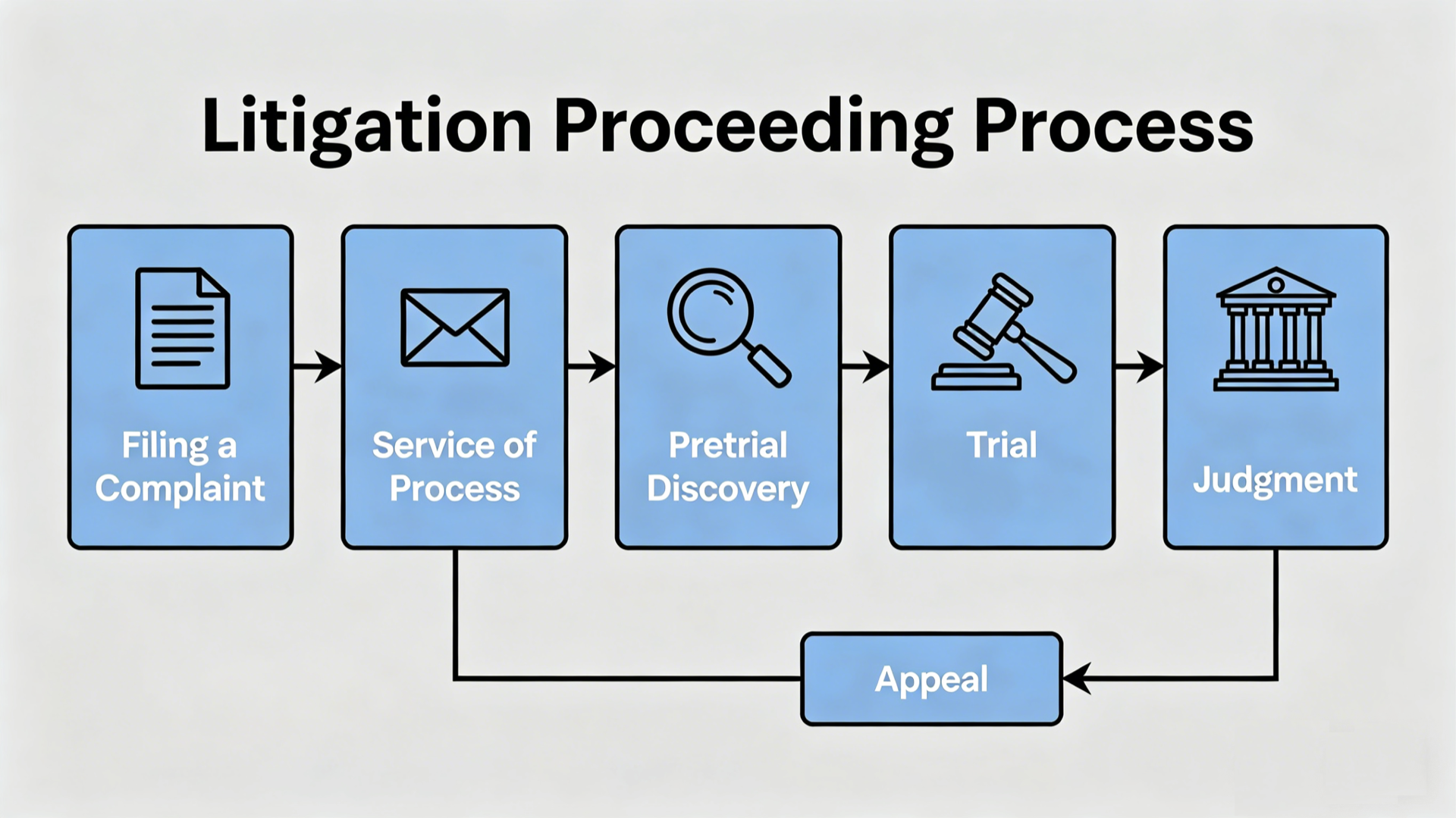
For international businesses and foreign nationals, the prospect of entering a Chinese courtroom can be daunting. From document authentication to selecting the right legal representative, understanding the rules of the game is essential to protecting your commercial interests.
At Zhang&Partners, we specialize in bridging the gap between international legal standards and Chinese judicial practice. Below is a comprehensive guide to the most frequently asked questions regarding foreign-related litigation in China. See also translation and notarization for litigation and jurisdiction in trade contracts.
1. Identity Verification: What Documents Are Required?
For foreign individuals
You must provide a valid passport as your primary identity document. If you are signing documents within China, your passport with a valid entry stamp is sufficient.
For foreign enterprises and organizations
Foreign entities must submit their certificate of incorporation and proof of the representative's authority (for example, board resolutions).
- The Apostille track: If your country is a member of the Hague Apostille Convention, your documents only need to be notarized in your home country and issued an Apostille certificate.
- The legalization track: If your country is not a member, your documents must be notarized and then authenticated by the Chinese embassy or consulate in your jurisdiction.
2. Legal Representation: Who Can You Hire?
A common misconception is that a foreign lawyer can argue a case in a Chinese court. Here are the rules:
- Mandatory PRC counsel: If you wish to be represented by an attorney in a Chinese court, you must appoint a lawyer licensed in the People's Republic of China (PRC).
- Role of foreign lawyers: You may still consult with your home-country counsel, but they can only appear in court as a non-lawyer representative or an expert witness under specific, restricted conditions.
3. Power of Attorney (POA): Modernized Procedures
Traditionally, a POA signed outside China required expensive and time-consuming notarization. Today, several efficient alternatives exist:
- Judicial witnessing: You may sign the POA in person before a Chinese judge, which eliminates the need for further notarization.
- Online video witnessing: Many Chinese courts now utilize specialized platforms (such as authorized remote witnessing systems) to allow foreign parties to complete the authorization via a secure video link from abroad.
4. Critical Timelines: The 30-Day Rule
In standard Chinese domestic litigation, the period for filing a defense or an appeal is 15 days. However, for parties without a domicile in mainland China, the law provides more breathing room:
- Defense period: 30 days.
- Appeal period: 30 days.
Note: If you have a registered office or domicile in China, the standard 15-day rule applies.
5. Evidence and Language Requirements
Language: The official language of the court is Chinese. Any evidence formed in a foreign language must be accompanied by a certified Chinese translation.
Notarization of evidence: Generally, evidence formed abroad does not require notarization unless it involves identity or status or certain official public documents. Commercial contracts and correspondence usually do not require notarization unless their authenticity is challenged by the opposing party.
6. Alternative Dispute Resolution (ADR)
Litigation is not always the best path. We often advise clients to consider:
- Court-annexed mediation: This is highly encouraged in China. A settlement reached through court mediation is legally binding and can be judicially confirmed for immediate enforcement.
- Arbitration: If your contract includes a valid arbitration clause, you can resolve disputes through institutions like CIETAC. Arbitration awards are confidential and enforceable in over 160 countries under the New York Convention.
Why Partner with Zhang&Partners?
Cross-border litigation in China requires a firm that understands both the local judicial mindset and the global commercial context. At Zhang&Partners, we ensure that your identity is correctly verified, your evidence is properly presented, and your rights are vigorously defended.
This article is general information only, not legal advice for your matter. For professional assistance, consult a PRC-licensed lawyer at Zhang&Partners.