Only a Stamp, No Signature: Is Your Chinese Contract Legally Binding?
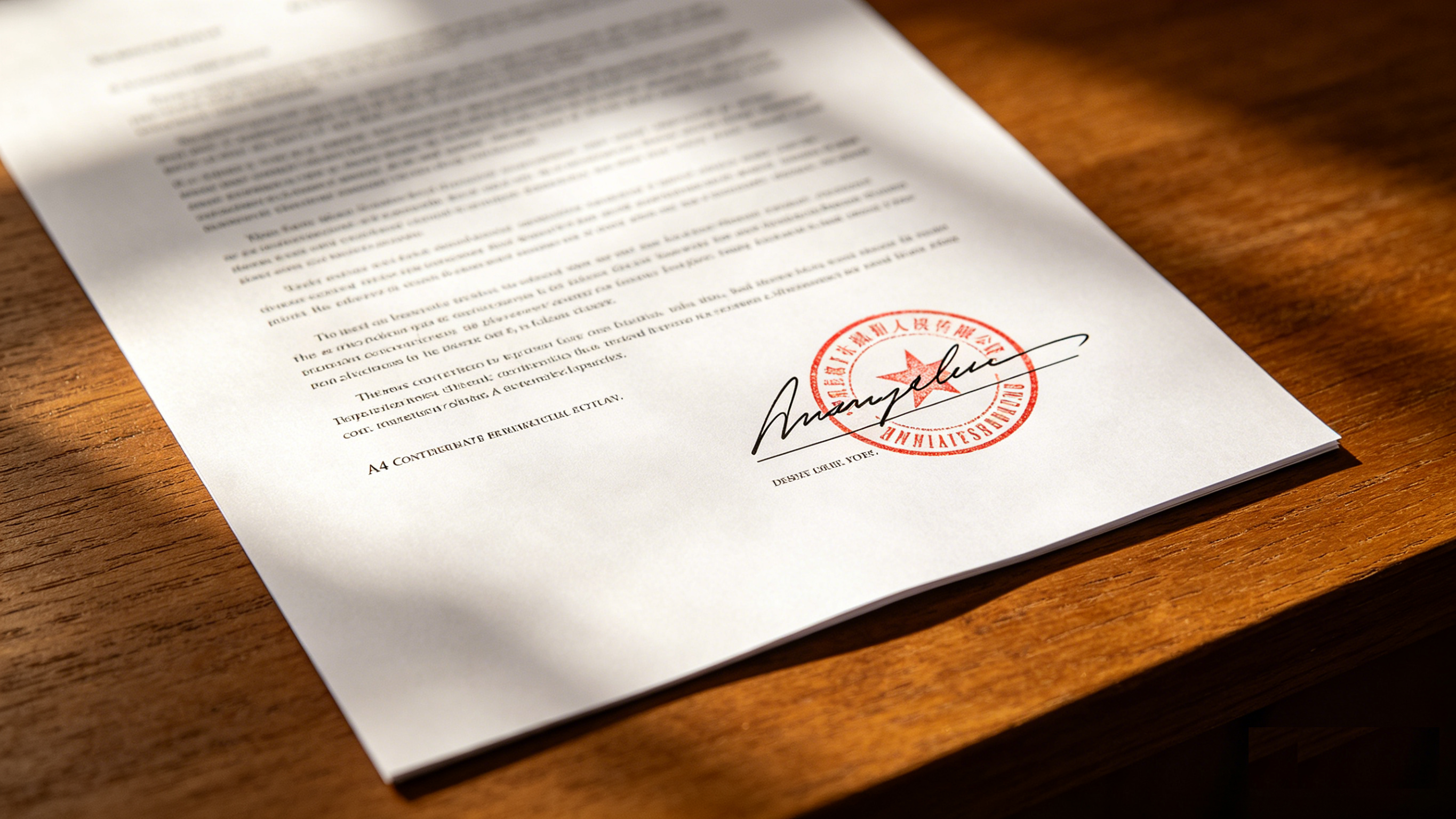
In Western business culture, the signature is king. In China, the Official Seal (Gōngzhāng), often called a "Chop," is the ultimate symbol of corporate will.
A common dilemma arises: If a Chinese partner stamps a contract but no executive signs it, is the deal valid?
1. The Short Answer: Yes (Usually)
Under Article 490 of the PRC Civil Code, a contract is formed when the parties "sign, seal, or finger-press" the document.
Legally, these are alternatives. The law does not strictly require "Signature + Seal" unless the contract itself explicitly states that both are mandatory for validity. Therefore, a genuine official seal alone is typically sufficient to bind the company.
2. The 2026 Legal Standard: Three Golden Rules
According to recent Supreme People’s Court interpretations (2024-2026), the validity of a "Seal-Only" contract depends on three factors:
A. The Authenticity of the Seal
The seal must be the registered official seal filed with the Public Security Bureau (PSB) or the one the company habitually uses in its business.
Warning: If the seal is forged or stolen, the contract is generally void unless you can prove "Apparent Representation" (that you had every reason to believe the person had the right to use it).
B. Authority of the Person Stamping
A seal doesn't float in mid-air; a human must press it.
Automatic Authority: If the legal representative or a high-level manager stamps it, it is almost always valid.
Questionable Authority: If a junior employee or an external party stamps it without a Power of Attorney (POA), the company might argue the act was unauthorized. However, the court will favor the "innocent" counterparty if the person appeared to have the authority (e.g., they were in the company office and had the key to the safe).
C. The "And/Or" Trap in Contract Language
Pay close attention to the Closing Clause of your contract:
"Signed OR Sealed": Either is fine.
"Signed AND Sealed": If the contract uses the word "and" (or a comma used as "and"), the court may rule the contract has not yet taken effect if the signature is missing.
3. Practical Risks: Why You Should Still Get a Signature
While a seal alone is legally valid, relying on it carries risks for international companies:
Seal Forgery: It is easier to forge a stamp than to forge both a stamp and a specific person's handwriting.
Internal Fraud: An employee might "borrow" the company seal to sign a private deal. Adding a signature from the Legal Representative creates a double layer of security.
Future Denials: Without a signature, a company might later claim the seal used was an "internal use only" stamp or a discarded old version.
4. 2026 Best Practices for International Parties
✅ Step 1: Demand "Signature + Seal"
Always insist that the Legal Representative or an Authorized Signatory (with a POA) signs the contract in addition to applying the Official Seal.
✅ Step 2: Verify the Seal
Ask for a scanned copy of the Business License. The name on the seal must match the name on the license exactly, character for character.
✅ Step 3: Check the Signatory's ID
If someone other than the Legal Representative signs, ask for a copy of their ID card and a Power of Attorney stamped with the company seal.
Step 4: Use a cross-page seal
For multi-page contracts, ensure the "Cross-page Stamp" is used. This is a stamp applied across the edges of the pages so that a portion of the seal appears on every page, preventing any page from being swapped out later.
Summary
In China, a seal is the company's "voice." While a signature isn't always legally required to make a contract valid, "Signature + Seal" is the gold standard for risk mitigation. If you are presented with a document that only has a stamp, don't assume it's invalid—but do perform your due diligence to ensure that the stamp was authorized.
Related Guides
- Browse all Guides & Resources
- How to find a reliable lawyer in China
- Foreign litigants in Chinese courts
- Translation and notarization for China litigation
This article is general information only, not legal advice. Rules and practice may vary by locality and case facts.