Trust But Verify: How to Spot a Scam Company in China
For international businesses, conducting due diligence on a Chinese partner is the most effective way to prevent fraud. While platforms like Qichacha or Tianyancha are popular, they often require a Chinese phone number and a paid subscription.
As an international collaborator, here is your Free 2026 Professional Toolkit to verify a Chinese company and determine if they are legitimate or a "shell" company.
Phase 1: Verification of Identity (The Essentials)
Before doing business, always ask for a copy of the company's Business License. If they refuse to provide it, walk away immediately.
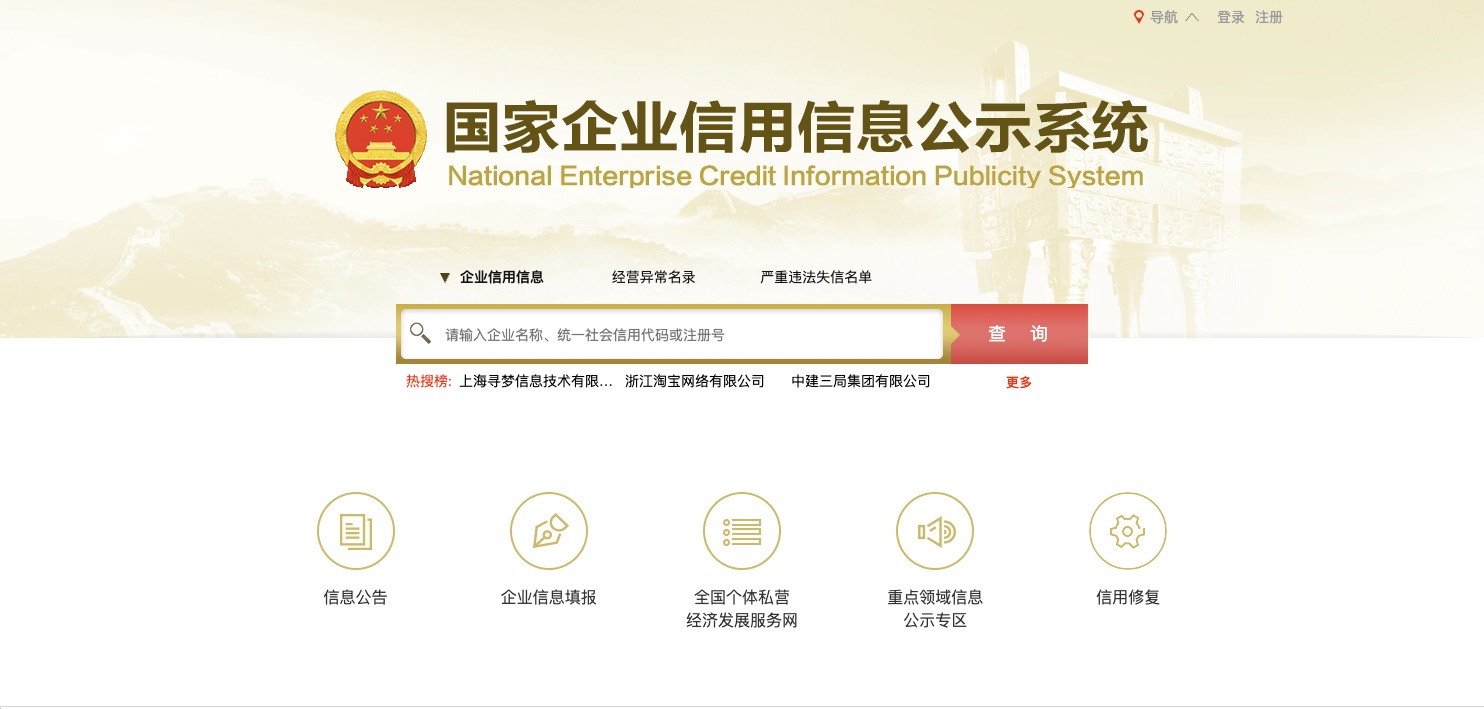
1. National Enterprise Credit Information Publicity System (NECIPS)
This is the official government database. It is the "source of truth" for all registered companies in China.
Website: http://www.gsxt.gov.cn
What to check:
Unified Social Credit Code: Does it match the license?
Registration Status: Look for "In Operation." Avoid companies listed as "Revoked" or "Deregistered."
Scope of Business: Does the company actually have the right to export the goods you want? If a "Consulting" firm is selling you 5,000 tons of steel, it's a red flag.
Registered Capital: Is it a 10,000 RMB company trying to handle a $10M deal?
Phase 2: Detecting Financial and Legal Risk
A company might exist, but is it "dying" or being sued?
2. China Judgments Online
Website: http://wenshu.court.gov.cn
Purpose: Search the company name to see past lawsuits.
Red Flags: Numerous cases regarding "labor disputes" or "sales contract disputes" suggest they treat employees and partners poorly.
3. China Execution Information Public System
Website: http://zxgk.court.gov.cn
Purpose: This is the "Blacklist" for Dishonest Persons (Lao-Lai).
What to check: Search the company name and the name of the Legal Representative. If they are on this list, they are legally barred from high-speed trains, flights, and certain luxury purchases because they refused to pay a court-ordered debt. Never send money to a company on this list.
Phase 3: The "Social Security" Litmus Test
This is a professional trick used by auditors in China to see if a company is a "ghost."
Check the Annual Report: In the NECIPS system (Step 1), look at the annual report.
Social Insurance Participation: By law, companies must report how many employees they pay social security for.
The Scam: A company claims to be a "top-tier manufacturer with 500 staff," but their official report shows only 3 people paying social security.
The Reality: This is likely a small trading intermediary or a shell company, not a factory.
Phase 4: Practical "Foreigner-Specific" Red Flags
In 2026, scammers have become more sophisticated. Watch for these 4 specific signs:
Bank Account Discrepancy: The contract is with "Shanghai ABC Trading," but they ask you to send payment to "Hong Kong XYZ Investment" or a personal bank account in the name of a manager. Only pay into an account that matches the company name on the Business License.
Generic Email Addresses: Serious Chinese exporters use corporate domains (e.g., sales@companyname.com). If a "large factory" uses @gmail.com, @163.com, or @qq.com, be suspicious.
The "Urgent" Discount: "If you pay the 50% deposit in the next 24 hours, we give you a 20% discount." Scammers use artificial urgency to bypass your due diligence.
No Physical Office: Use Baidu Maps (the Chinese version of Google Maps) to look up their address. If the "factory" is located in a residential apartment building or a generic virtual office mall, it is not a manufacturer.
Summary Checklist for 2026
[ ] Business License: Obtained and verified on NECIPS.
[ ] Official Seal: Matches the company name on the license perfectly.
[ ] Blacklist: Checked the Legal Representative on the Execution Information System.
[ ] Social Security: Verified the actual number of employees in the annual report.
[ ] Bank Account: Payment info matches the registered company name.
Pro-Tip: If the deal is worth more than $50,000, it is worth hiring a local Chinese lawyer or a third-party inspection firm (like SGS or Intertek) to do a physical site visit. A $500 inspection fee is the best insurance against a $50,000 loss.
Related Guides
- Browse all Guides & Resources
- Dispute resolution for China trade
- Export licensing when sourcing from China
- Jurisdiction in trade contracts
This article is general information only, not legal advice. Rules and practice may vary by locality and case facts.