Quality Disputes in International Trade: What to Do When Goods Are Defective or Not As Described
You ordered goods on Alibaba.com based on a sample or specification. The shipment arrives. The products don’t match the sample, critical components are missing, or the quality is far below what was promised. Quality disputes are the most common type of conflict in international trade with China—and among the hardest to resolve. This guide explains how to protect your position and what legal remedies are available under the CISG and Chinese law.
Quality disputes are the most common type of conflict in international trade with China—and among the hardest to resolve. Unlike non-delivery (where the supplier simply didn't ship), quality cases involve contested facts, technical evidence, and arguments about whether the defect existed at the time of shipment or arose later. This guide explains how to protect your position and what legal remedies are available.
The First Problem: Did You Even Agree on Quality Standards?
Many Alibaba transactions are documented only by a Proforma Invoice (PI) or a one-page Purchase Order. These documents typically list the product name, quantity, and price—but rarely specify quality standards, inspection criteria, or remedies for non-conformity. When a dispute arises, the parties argue past each other: the buyer says "this is not what I ordered," and the supplier says "this is exactly what you paid for."
Under the United Nations Convention on Contracts for the International Sale of Goods (CISG), which applies to most cross-border sales between China and CISG member states, goods must conform to the contract in quantity, quality, and description (Article 35). If the contract does not specify quality standards, the goods must be:
- Fit for the purposes for which goods of the same description would ordinarily be used;
- Fit for any particular purpose made known to the seller at the time of contracting, unless the buyer did not rely on the seller's skill and judgement;
- Of the same quality as any sample or model provided by the seller;
- Contained or packaged in the manner usual for such goods.
The CISG provides a baseline, but it is far better to specify quality standards explicitly in the contract—by reference to an international standard (ISO, ASTM), an industry specification, or a detailed product description with measurable parameters. Without agreed standards, the dispute becomes a battle of subjective opinions.
Critical Deadline: The Inspection and Notice Period
Both the CISG (Article 38–39) and Chinese law (PRC Civil Code Articles 620–621) require the buyer to inspect the goods and notify the seller of any non-conformity within a reasonable period. If you fail to do so, you may lose the right to rely on the defect.
Key rules:
- If the contract specifies an inspection period: you must give notice within that period. But if the agreed period is unreasonably short—for example, 3–5 days for machinery that requires installation and testing—Chinese courts may treat it as applying only to visible (surface) defects, not hidden defects.
- If no period is specified: you must inspect within a reasonable time, considering the nature of the goods. The maximum period is two years from receipt (or the duration of any agreed quality guarantee period).
- For hidden defects: defects that could not be discovered by a reasonable initial inspection (e.g., internal component flaws, chemical composition issues) can be raised later—but you must still notify the seller promptly after discovery.
Practical tip: Always conduct an initial inspection immediately upon receipt and document the results in writing. If you need time for testing, notify the seller in writing that you have received the goods, have conducted a preliminary inspection, and reserve the right to raise further defects after full testing. This preserves your rights while testing continues.
Building a Legally Sufficient Evidence Chain
To succeed in a quality claim, you must prove two things: (a) the goods are defective or non-conforming, and (b) the defective goods are the ones the supplier shipped. The second point is often the harder one. Suppliers routinely argue: "The goods were fine when they left our factory. Any damage occurred during shipping. Or the buyer is showing us someone else's goods."
Evidence That Works
- Third-party inspection at origin (pre-shipment): Before the goods leave China, engage an independent inspection company (SGS, Bureau Veritas, Intertek, or a Chinese CIQ agency) to inspect the goods at the factory or port. This is the single most powerful piece of evidence you can have—it documents the condition of the goods before shipment and links them to the supplier.
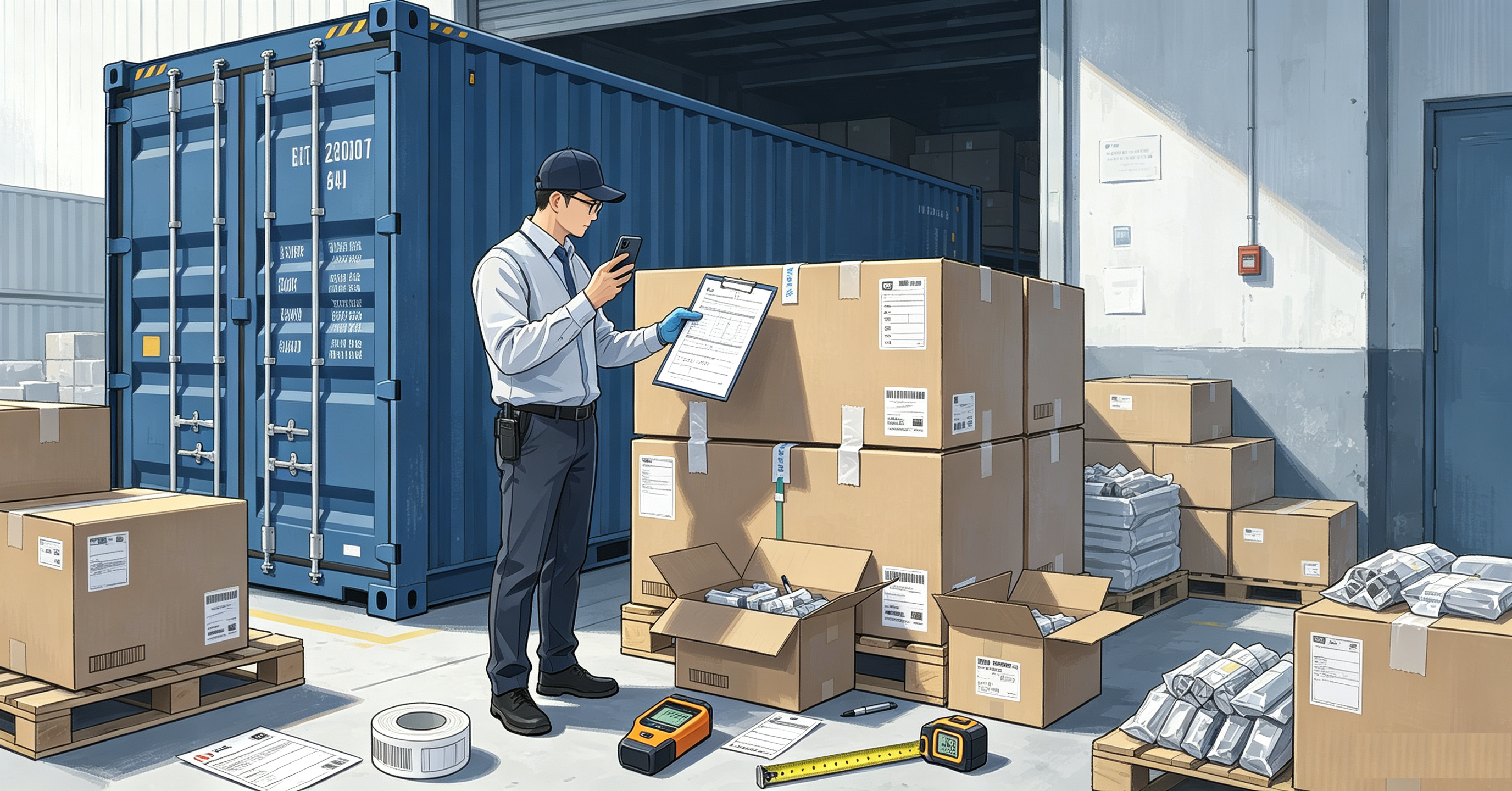
- Third-party inspection at destination: If you did not inspect at origin, have the goods inspected by an independent agency at the port of arrival, ideally before they clear customs and before the container is opened. Photograph the container seal intact, then document the opening and inspection process.
- Container weighbridge records: If the shipment weight recorded at the destination port differs materially from the weight declared at the port of loading, this can prove short-shipment or substitution.
- Supplier communications: Messages in which the supplier acknowledges the problem, promises to fix it, or offers a discount are admissions that can be used as evidence. Keep all communications on the platform (Alibaba messaging) rather than WhatsApp or WeChat, where messages can be deleted and are harder to authenticate.
- Photographs and video with metadata: Date-stamped photographs and video of the unsealing and inspection process.
Evidence That Often Fails
- Photos of goods taken weeks after delivery, with no proof of when or where they were taken.
- Your own employee's description of the defect without supporting technical data.
- A report from a testing lab that did not follow recognised testing protocols or did not document the chain of custody of the samples.
The "Used the Goods" Trap
A common scenario: the buyer receives goods, discovers quality issues, but continues to use or resell some of the goods while negotiating with the supplier. Months later, when negotiations fail, the buyer tries to sue. The supplier's defence: "If the goods were really defective, why did the buyer use them?"
Chinese courts have held that continued use of goods beyond a reasonable period can be treated as acceptance of quality. The key distinction is: was the use merely for testing and evaluation (which is acceptable) or for ordinary commercial purposes (which implies acceptance)? A Chinese Supreme People's Court guidance case illustrates this: a buyer that used allegedly defective pressure machines for an extended period and produced saleable products was denied the right to claim quality defects. The court reasoned that the buyer's conduct—prolonged commercial use—was inconsistent with a claim of fundamental non-conformity.
Practical rule: If the goods are genuinely unusable, stop using them immediately. Notify the seller in writing. Preserve the goods for inspection. If you must use or resell some of them to mitigate losses, document what you are doing and why, and notify the seller.
What You Can Recover
Under CISG and Chinese law, a buyer who receives non-conforming goods can claim:
- Price reduction (CISG Article 50): a proportional reduction reflecting the diminished value of the goods.
- Damages (CISG Article 74): including the cost of repair or replacement, loss of profit on resale contracts, and incidental expenses such as inspection costs, storage, and return shipping.
- Avoidance of the contract (CISG Article 49): if the non-conformity amounts to a fundamental breach—meaning it substantially deprives the buyer of what they were entitled to expect. In such cases, the buyer can return the goods and claim a full refund.
The buyer also has a duty to mitigate losses (CISG Article 77). Do not let defective goods sit in a warehouse accruing storage charges for months without taking action. Document your mitigation efforts.
Practical Checklist for Quality Disputes
- Inspect immediately on arrival. Do not delay. The clock starts when you receive the goods.
- Notify the seller in writing within the contractual or reasonable inspection period. Be specific: describe the defect, provide photographic evidence, and state what remedy you seek.
- Preserve the goods as evidence. Do not use, alter, or dispose of them without documenting it and notifying the seller.
- Engage an independent inspector. An SGS or similar report is worth far more than your own descriptions.
- Consult a Chinese trade lawyer early. The steps you take (or fail to take) in the first days after discovery can determine the outcome of the case.
For more on enforcing your rights against Chinese suppliers, see our 4-step enforcement framework and Recover losses from China suppliers: a 4-step guide.
This article is general information only, not legal advice for your matter. For professional assistance, consult a PRC-licensed lawyer at Zhang&Partners.