Defining the Scope of Damages for Breach of Sales Contracts in China
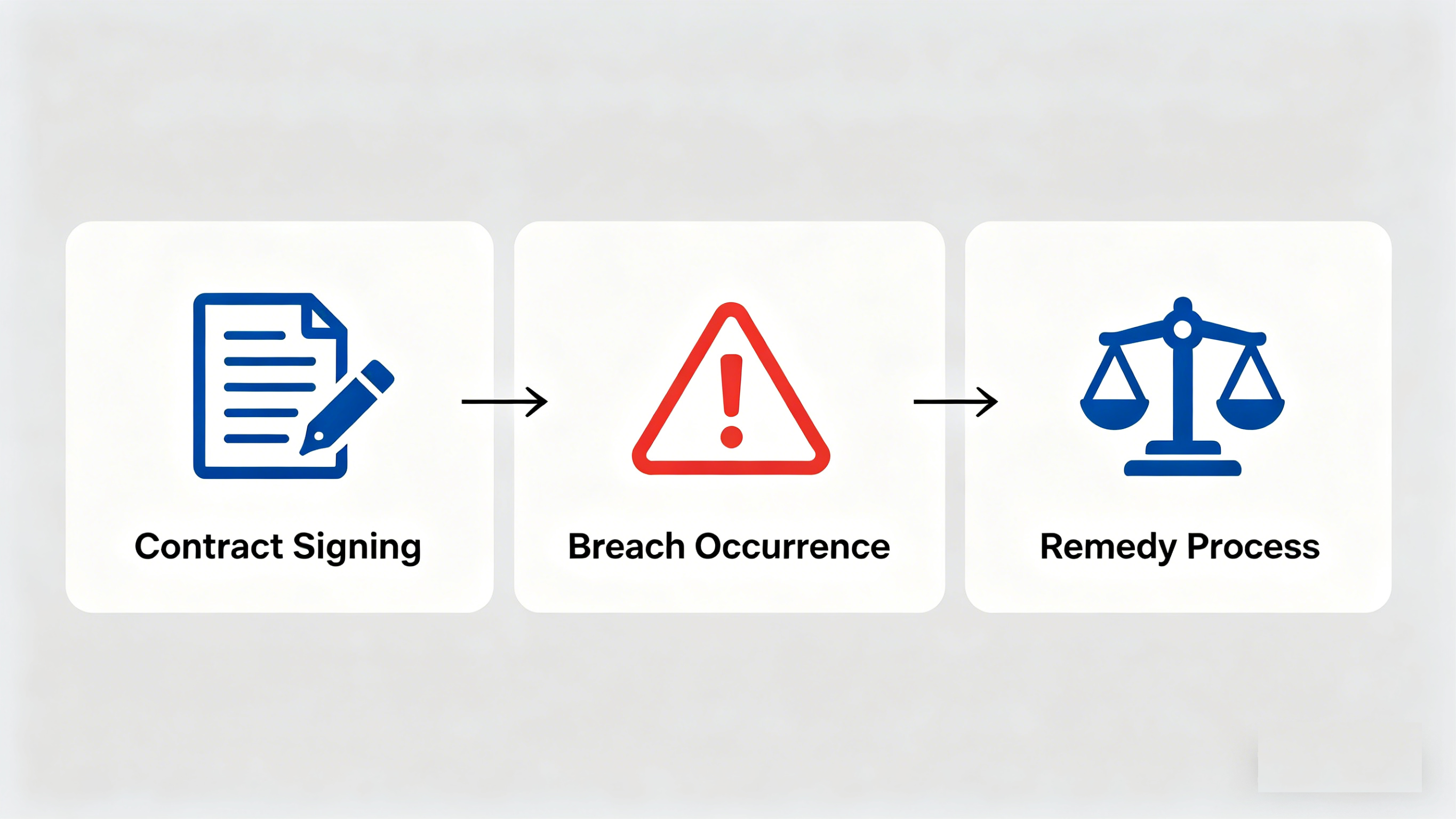
In the Chinese market, the sales contract is the cornerstone of commercial exchange. When a breach occurs, the most critical question for an international party is: "How much can I recover?" or "What is my maximum exposure?"
Under Article 584 of the PRC Civil Code, China follows the principle of Full Compensation, balanced by the rule of Foreseeability.
1. The Core Principle: Full Compensation
The primary goal of Chinese law is to put the non-breaching party in the same economic position they would have occupied had the contract been fully performed.
Actual Losses: Direct reduction in existing assets (e.g., costs incurred for performance, damage to goods, freight charges).
Loss of Profits (Expectation Interests): Gains that the non-breaching party would have reasonably obtained upon successful completion of the deal.
2. The Three "Filters" of Liability
Chinese courts do not grant unlimited damages. To define the final amount, the law applies three major limiting rules:
A. The Foreseeability Rule (The "Ceiling")
This is the most important protection for a breaching party. Damages cannot exceed the loss that the breaching party foresaw or should have foreseen at the time the contract was signed.
Standard: What would a "reasonable person" in that industry expect?
Tip: If you have a high-value downstream contract relying on a supplier, you must disclose this to them during negotiations to ensure those specific profits fall within the "foreseeable" scope.
B. The Mitigation Rule
The non-breaching party has an "incomplete obligation" to prevent the loss from expanding.
If a supplier fails to deliver, the buyer should attempt to purchase substitute goods from the market at a reasonable price.
Consequence: Any loss caused by the failure to take reasonable mitigation steps cannot be recovered.
C. Offsetting Gains and Losses
If the breach actually saved the non-breaching party money (e.g., unpaid transport costs) or brought in new benefits, these must be deducted from the final compensation total.
3. Calculating "Loss of Profits" in Practice
In Chinese judicial practice, courts typically use three methods to calculate the often-disputed "expected profits":
Comparison Method (Price Differential): Used when the goods are resold. The damage is the difference between the contract price and the actual resale price (minus saved costs).
Profit Margin Method: Used for manufacturing or operating losses. Courts look at the historical average profit margin of the non-breaching party or the industry average during the same period.
Discretionary Estimation: If the exact amount is hard to prove, the judge may estimate a "reasonable" amount based on the degree of fault and market risks.
4. Key Takeaways for International Businesses
Commercial vs. Consumer Logic
Chinese courts are generally more supportive of "loss of profit" claims in B2B (Business-to-Business) transactions, as professional merchants are expected to have a higher capacity to foresee commercial risks compared to individual consumers.
Liquidated Damages vs. Actual Loss
Most Chinese contracts include a Liquidated Damages (LD) clause.
Note: In China, LD clauses are not set in stone. Under Article 585, if the agreed LD is "excessively higher" (usually more than 30% above actual loss) or "lower" than the actual loss, either party can petition a court or arbitrator to adjust it.
The court's benchmark for this adjustment will always return to the "actual loss" definitions described above.
Recommendations
Specify Damages in Writing: To avoid the uncertainty of "foreseeability," clearly define what constitutes a loss in your contract (e.g., specific downstream penalties).
Document Everything: In Chinese courts, the burden of proof for the certainty of lost profits lies with the claimant. Keep rigorous records of market price quotes and related correspondence.
Summary
The PRC legal system seeks a balance: it aims to fully "fill the gap" left by a breach but refuses to "punish" the breaching party beyond the reasonable commercial risks they assumed at the start of the deal. Understanding these boundaries is essential for effective risk management in China.
Related Guides
- Browse all Guides & Resources
- Dispute resolution for China trade
- Export licensing when sourcing from China
- Jurisdiction in trade contracts
This article is general information only, not legal advice. Rules and practice may vary by locality and case facts.