How Chinese Courts Adjudicate International Trade Disputes: Jurisdiction, Procedure and Evidence
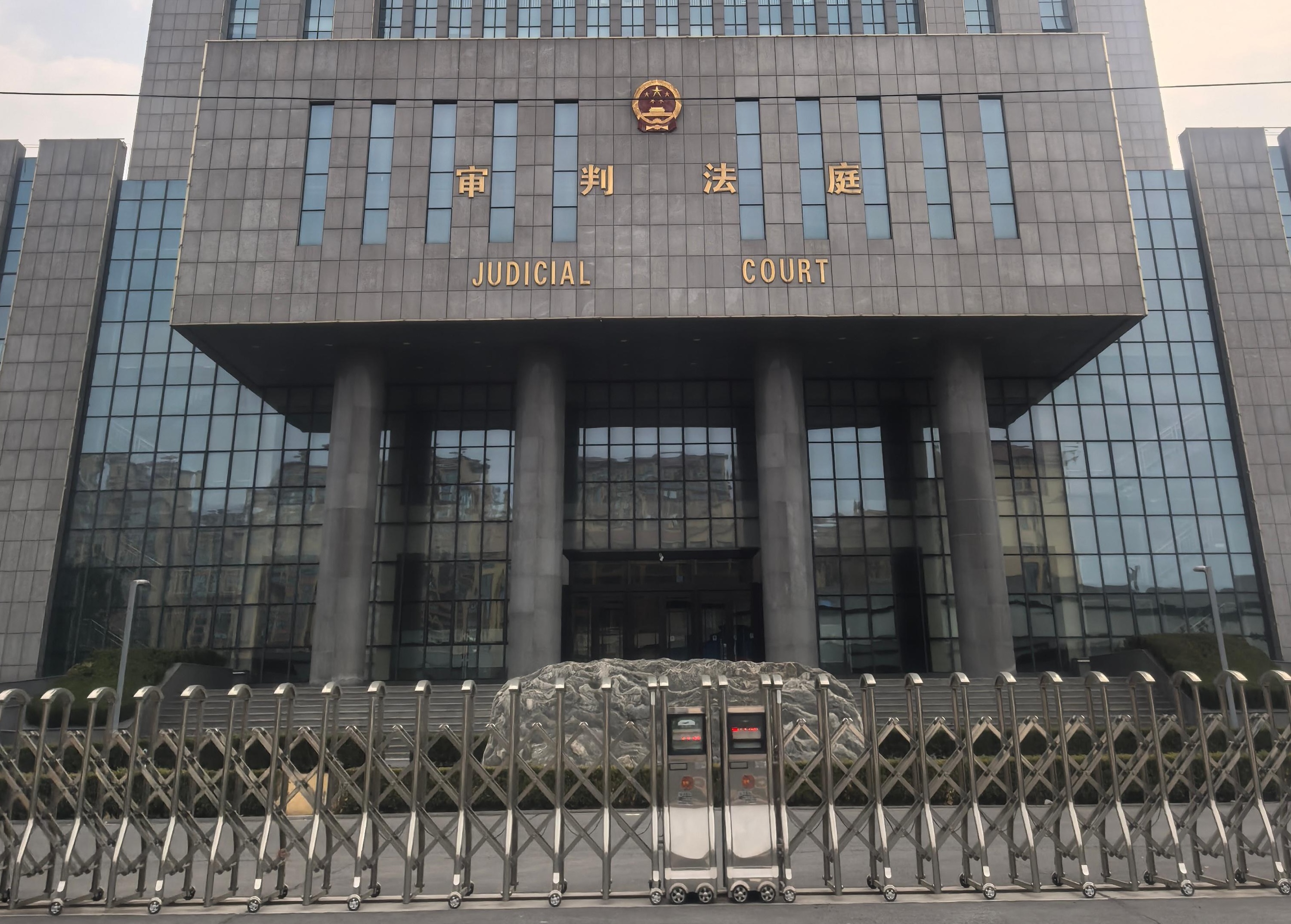
As Chinese enterprises engage ever more deeply in global trade, the volume and complexity of international trade disputes continue to rise. For foreign companies doing business with Chinese counterparts — and their legal counsel — understanding the procedural rules and substantive law applied by Chinese courts in international trade cases is essential to effectively protecting one's legal rights and interests.
This article systematically introduces the framework for adjudicating international trade disputes in Chinese courts, covering three key dimensions: jurisdiction review, procedural principles and requirements, and evidentiary rules.
1. Jurisdiction Review and Determination
Where the Parties Have Agreed on a Forum
If the parties have expressly agreed in their contract to submit disputes to an arbitral institution, neither a Chinese court nor a foreign court has jurisdiction over the dispute.
If the parties have agreed on the jurisdiction of a Chinese court, that court has jurisdiction.
If the parties have agreed on the jurisdiction of a foreign court, and the buyer has already filed suit in that foreign jurisdiction, a Chinese court may still accept and hear the case — unless the parties have expressly excluded the jurisdiction of Chinese courts in their contract.
Where No Forum Has Been Agreed
If the contract does not specify a forum, a party may bring suit in a Chinese court provided any one of the following connecting factors exists, even if the foreign party has no established office in China:
- The defendant has seizable assets within China
- The contract was signed in China
- The place of performance of the contract is in China
Jurisdiction by Appearance
Notably, even where none of the above connecting factors apply, if a plaintiff files suit in a Chinese court and the defendant fails to challenge jurisdiction within the defense period and instead makes a substantive defense, the Chinese court acquires jurisdiction by the defendant's appearance.
2. Procedural Principles, Requirements, and Rules
Fundamental Procedural Principles
Principle of equal treatment manifests in two respects. First, foreign and Chinese parties have equal capacity for civil litigation rights and litigation conduct. Second, foreign parties suing or defending in Chinese courts enjoy the same civil litigation rights and bear the same litigation obligations as Chinese parties; they shall neither be discriminated against nor granted special treatment by reason of their foreign status.
Principle of reciprocity means that if a foreign court imposes restrictions on the civil litigation rights of Chinese parties, Chinese courts will impose equivalent restrictions on the civil litigation rights of parties from that foreign country. For example, if a foreign court prohibits Chinese citizens from appointing litigation agents, Chinese courts will likewise prohibit parties from that country from doing so.
Basic Litigation Requirements
- Language: All parties must use the language commonly used in China. Where a foreign party makes a statement in a foreign language during a hearing, it must be translated into Chinese by an on-site interpreter. A party may request the court to provide an interpreter, at the party's own expense. Foreign-language evidence must be accompanied by a Chinese translation.
- Legal representation: Foreign parties suing or defending in Chinese courts must retain PRC-licensed practicing lawyers if they wish to be represented by counsel.
- Power of attorney: Where a foreign party without domicile in China retains a Chinese lawyer or other person as agent, any power of attorney sent or delivered from outside China must be notarized by a notary in the country of origin and authenticated by the Chinese embassy or consulate in that country before it takes legal effect.
Special Procedural Features
International trade cases have the following special procedural characteristics:
- Hearing timeline: International trade cases are primarily adjudicated under Part IV of the Civil Procedure Law — the "Special Provisions on Foreign-Related Civil Procedure." The defense period, public notice period, appeal period, and service methods differ from those applicable to domestic civil and commercial cases, and proceedings generally take longer. The Civil Procedure Law imposes no statutory time limit on the adjudication of such cases.
- Service of process: In addition to methods common in domestic cases (such as service on a recipient agent, service by mail, and service by public notice), international trade cases may use special methods such as service under international conventions (e.g., the Hague Service Convention) and service through diplomatic channels.
- Judgment drafting requirements: Judgments in international trade cases must not only meet the formatting requirements of ordinary judgments but must also document the court's analysis in identifying and determining jurisdiction, applying conflict-of-law rules, and ascertaining foreign law. The judgment must in particular explain the rationale for exercising jurisdiction and for applying a particular governing law. When foreign law is applied, the final section of the judgment citing legal authority may only cite the conflict rules or other legal provisions under which the foreign law is applied; it may not directly cite foreign law provisions.
3. Evidentiary Review and Determination
Burden of Proof
International trade disputes follow the basic principle of "he who asserts must prove" — a party who makes a claim bears the burden of adducing evidence in support of that claim.
Evidentiary Requirements
Time limit for producing evidence: Generally 30 days. However, because international trade cases often involve evidence formed outside China, and parties may need considerable time to gather such evidence, courts typically grant extensions to 60 or even 90 days upon application.
Formal requirements for evidence formed abroad:
- Evidence proving a party's litigation capacity (such as corporate registration documents) must be notarized, authenticated, or otherwise certified.
- For other evidence formed abroad, the submitting party may choose whether to have it notarized or authenticated — unless the court deems it necessary. For example, data messages formed abroad (such as emails), by their replicable and alterable nature, generally require notarization of the entire process of downloading and printing in the presence of a notary, together with authentication, to validly establish authenticity.
Judicial Authentication Rules
Judges evaluate evidence according to the following rules:
- Evidence accepted or not objected to by the opposing party after examination and cross-examination shall serve as the basis for judgment. Post-hearing objections or requests for further verification will generally not be entertained.
- Where the opposing party denies evidence but the grounds for denial are manifestly unfounded and the party cannot produce rebuttal evidence, the evidence is deemed valid.
- Evidence consisting of a final and binding Chinese court judgment or a notarially certified document recording a legal act or fact, which the opposing party cannot rebut with evidence, is deemed valid.
- Where the opposing party produces contrary evidence sufficient to rebut the submitting party's evidence, and the submitting party cannot further counter-rebut, the contrary evidence is deemed valid.
- Evidence whose source, form, or content is found to be unlawful upon review is deemed invalid.
- As to facts found in a foreign court's civil or commercial judgment, unless that judgment has been recognized by a Chinese court or accepted by the parties, neither the facts found nor the judgment outcome may be directly adopted; they may only be used as evidentiary material in the proceedings.
This article is general information only, not legal advice for your matter. For professional assistance, consult a PRC-licensed lawyer at Zhang&Partners.