Social Insurance Guide for Foreigners Working in China: Complete Coverage Overview
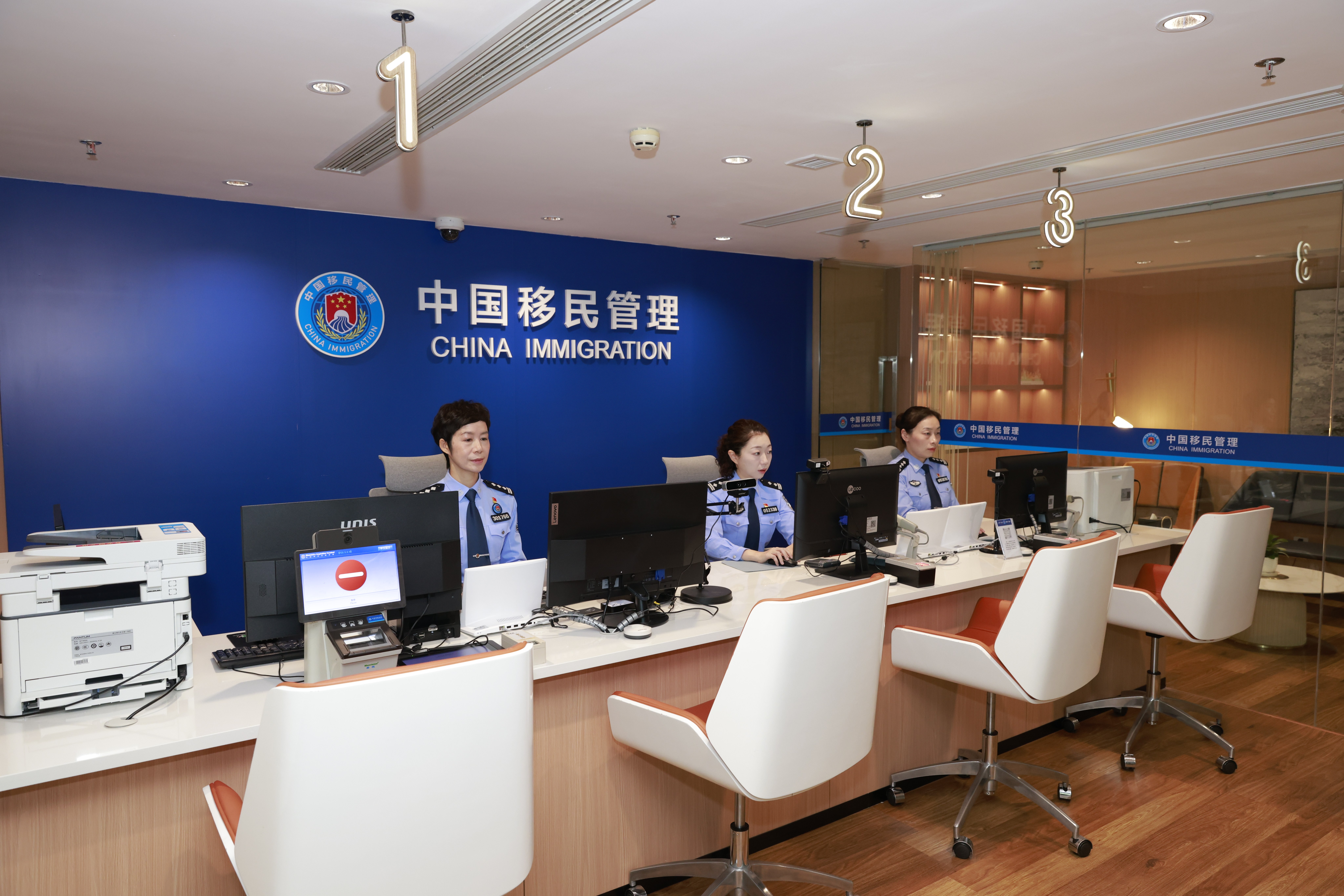
As China's economy continues to develop and its openness to the world expands, an increasing number of foreign nationals are employed within Chinese territory. To protect the lawful rights and interests of foreigners working in China, China formally incorporated foreign nationals into its social insurance framework beginning in 2011. This article provides a comprehensive practical guide to China's social insurance system for foreign employees and their employers, covering the scope of coverage, the five insurance types, contribution rates, bilateral social security agreements, enrollment procedures, and the refund of personal account balances upon departure from China.
I. Legal Basis and Scope of Application
Principal Legal Authority
- Social Insurance Law of the People's Republic of China (effective July 1, 2011)
- Interim Measures for Foreigners Working in China to Participate in Social Insurance (Order No. 16 of the Ministry of Human Resources and Social Security, effective October 15, 2011)
Scope of Coverage
Under the Interim Measures, foreigners lawfully recruited by employers duly registered or licensed within Chinese territory shall participate in social insurance in accordance with the law. The following categories of foreign nationals are specifically covered:
- Foreign nationals holding a valid Foreigner's Work Permit, Foreign Expert Certificate, Foreign Resident Journalist Certificate, or other valid work document and lawfully employed in China;
- Foreign nationals who have established an employment relationship with an employer in China;
- Foreign nationals who have entered into an employment contract with an overseas employer and are dispatched to work at a work unit within China.
Circumstances in which participation in China's social insurance is not required:
- Nationals of countries that have concluded a bilateral social security agreement with China who are dispatched to work in China by an overseas employer and continue to participate in social insurance in their home country (see Part VI below);
- Foreign nationals on short-term stays in China (typically not exceeding three months) who have not established an employment relationship with a Chinese employer;
- Foreign nationals who have reached China's statutory retirement age and are already receiving a pension abroad.
II. Types of Social Insurance and Contribution Rates
China's social insurance system comprises five basic insurance categories (commonly referred to as the "Five Insurances"). Contribution rates for employees and employers vary by locality. The following overview uses major cities such as Shenzhen, Shanghai, and Beijing as reference points.
(A) Basic Old-Age (Pension) Insurance for Employees
Pension insurance provides basic living security for insured persons after retirement.
- Employer portion: 14% to 16% (varies by locality; e.g., 16% in Shanghai, 14% in Shenzhen)
- Employee portion: 8%
- Contribution base: Based on actual salary, capped at 300% of the local average monthly wage for the preceding year, with a floor of 60% of that average
Entitlement conditions: Upon reaching the statutory retirement age and having contributed for a cumulative period of at least 15 years, the insured person is entitled to receive a monthly basic pension. Foreign nationals who satisfy the conditions are equally entitled to receive a pension in China.
(B) Basic Medical Insurance for Employees
Medical insurance reimburses the insured person's medical expenses.
- Employer portion: 6% to 10% (e.g., 10% in Shanghai; tiered rates of 6%-8% in Shenzhen)
- Employee portion: 2%
- Contribution base: Same as pension insurance
Insured persons may use their social security card to receive medical treatment at designated medical institutions and obtain reimbursement of outpatient and inpatient medical expenses at prescribed rates.
(C) Work-Related Injury Insurance
Work-related injury insurance provides medical treatment and financial compensation to employees who suffer work-related accidental injuries or contract occupational diseases.
- Employer portion: 0.2% to 1.9% (floating rate based on industry risk classification)
- Employee portion: 0% (employee is not required to contribute)
Work-related injury insurance premiums are determined by reference to the employer's industry risk classification and are subject to a system of differentiated and floating rates.
(D) Unemployment Insurance
Unemployment insurance provides basic living security for a defined period to insured persons whose employment is interrupted for reasons not attributable to themselves.
- Employer portion: 0.5% to 1% (varies slightly by locality)
- Employee portion: 0.5%
- Contribution base: Same as pension insurance
Note: In certain local practices, because foreign nationals may find it difficult to satisfy the substantive conditions for claiming unemployment benefits (e.g., the requirement to seek re-employment within Chinese territory), operational practice varies across localities. It is advisable to consult the local social insurance agency for specific information.
(E) Maternity Insurance
Maternity insurance provides maternity allowances and maternity medical services to female employees whose work is temporarily interrupted due to childbirth.
- Employer portion: 0.5% to 1% (varies slightly by locality)
- Employee portion: 0% (employee is not required to contribute)
At present, in most localities across China, maternity insurance has been merged with basic medical insurance for unified collection and administration (the "two-insurance merger"). Employers and employees are no longer required to pay separate maternity insurance premiums.
III. Housing Provident Fund
In addition to the "Five Insurances," foreign nationals working in China may also be covered by the Housing Provident Fund. Under the Regulations on the Administration of Housing Provident Funds and related provisions, foreign nationals who have established an employment relationship with an employer may contribute to the Housing Provident Fund (participation is mandatory in certain cities such as Shenzhen and optional in others). The employer and employee contribution rates each range from 5% to 12%, with the specific rate to be determined by the employer.
Upon leaving employment and departing China, foreign nationals may withdraw the balance accumulated in their Housing Provident Fund account in a lump sum.
IV. Enrollment Procedures
(A) Employer Registration
An employer that recruits a foreign national shall, within 30 days of processing the foreigner's employment documentation, complete social insurance registration with the local social insurance agency. The materials typically required include:
- A valid employment document such as the Foreigner's Work Permit or Foreign Expert Certificate;
- The foreign national's valid passport;
- The employment contract or dispatch certificate;
- The employer's business license or registration certificate;
- Other materials as required by the local social insurance agency.
(B) Social Security Card Application
After enrolling in social insurance, foreign nationals may apply for the Social Security Card of the People's Republic of China. The social security card is an essential credential for medical settlement and receipt of social insurance benefits. Cardholders may use it to settle medical expenses directly at designated medical institutions.
(C) Payment of Social Insurance Contributions
The employer withholds and remits the foreign employee's social insurance contributions on a monthly basis. Both the employer's and employee's portions are declared and paid centrally by the employer to the tax authority or social insurance agency. Foreign employees have the right to inquire of their employer about their social insurance contribution records.
V. Entitlement to Social Insurance Benefits
(A) Pension Insurance Benefits
A foreign insured person who has reached China's statutory retirement age (60 years for males, 50 years for female workers, 55 years for female cadres) and has contributed for a cumulative period of at least 15 years is entitled to receive a monthly basic pension. The method of calculating the pension is the same as for Chinese insured persons.
Where the cumulative contribution period is less than 15 years, the insured person may elect to withdraw the balance of the individual account in a lump sum or continue contributing until the 15-year threshold is met (subject to local social insurance policy requirements).
(B) Medical Insurance Benefits
After enrolling in basic medical insurance for employees, foreign nationals enjoy the same medical insurance benefits as Chinese insured persons and may use their social security card to obtain reimbursement of outpatient and inpatient medical expenses at designated medical institutions.
(C) Work-Related Injury Insurance Benefits
Where a foreign national suffers a work-related accidental injury or contracts an occupational disease, the determination of work-related injury, assessment of work capacity, and work-related injury insurance benefits are governed by the same legal standards and procedures as apply to Chinese employees.
(D) Maternity Insurance Benefits
Female foreign nationals enrolled in maternity insurance are entitled to maternity medical expenses and maternity allowance benefits on the same terms as Chinese female employees.
VI. Bilateral Social Security Agreements
Purpose of the Agreements
To avoid double payment of social insurance contributions, China has concluded bilateral social security agreements with a number of countries. Under these agreements, nationals of one contracting state who are dispatched to work in the other contracting state may, where the conditions of the agreement are satisfied, be exempted from contributing to specified categories of social insurance in the host country and continue to be covered solely in the sending country.
Countries That Have Concluded Bilateral Social Security Agreements with China
As of 2025, China has formally concluded bilateral social security agreements with the following countries:
- Germany (signed 2001)
- South Korea (signed 2003)
- Denmark (signed 2013)
- Finland (signed 2014)
- Canada (signed 2015)
- Switzerland (signed 2015)
- Netherlands (signed 2016)
- France (signed 2016)
- Spain (signed 2017)
- Luxembourg (signed 2017)
- Japan (signed 2018)
- Serbia (signed 2018)
Principal Exemptions Under the Agreements
The core exemptions under bilateral social security agreements typically relate to pension insurance and unemployment insurance. Taking the China-Germany agreement as an example, German nationals dispatched to work in China may, during the period of dispatch, be exempted from contributing to China's pension insurance and unemployment insurance, with their pension insurance relationship maintained in Germany. However, medical insurance, work-related injury insurance, and maternity insurance generally remain subject to participation in the host country.
Applying for Exemption
Dispatched employees who satisfy the applicable conditions shall present a Certificate of Coverage issued by their home country's social security authority to the social insurance agency at their place of work in China and apply for exemption from paying the relevant social insurance contributions.
VII. Settlement of Social Insurance Individual Accounts Upon Departure from China
A foreign insured person who departs China and returns to their home country before satisfying the conditions for receiving a pension may apply, in one lump sum, to withdraw the accumulated balance in their social insurance individual accounts — commonly referred to as a "social insurance refund."
Scope of Withdrawal
- Pension insurance: The balance of the individual account (i.e., the employee's own contributions plus accrued interest) may be withdrawn in a lump sum. The employer's contributions, having been paid into the social pooling fund, are not withdrawable.
- Medical insurance: Any balance in the individual medical insurance account (if applicable) may be withdrawn in a lump sum.
- Unemployment insurance, work-related injury insurance, maternity insurance: These have no individual accounts and are not withdrawable.
Withdrawal Procedure
- The employer or the foreign national personally submits a written application to the social insurance agency at the place of enrollment, accompanied by the valid passport, proof of termination of the employment relationship, social security card, and other required documents;
- Upon review, the social insurance agency issues an Approval Form for Lump-Sum Withdrawal of Pension Insurance Individual Account Balance by a Foreign National Departing China;
- Upon approval, the social insurance agency disburses the balance of the individual account to the applicant in a lump sum (typically in RMB to a bank account designated by the applicant).
Important Considerations
- Termination of social insurance relationship: After the lump-sum withdrawal of the individual account balance, the foreign national's social insurance relationship in China is terminated. If the person subsequently returns to work in China, they must re-enroll in social insurance and establish a new social insurance relationship; prior contribution periods will not be preserved.
- Choice to preserve the social insurance relationship: If the foreign national anticipates the possibility of returning to work in China in the future and wishes to satisfy the 15-year contribution threshold to qualify for a pension, they may elect not to withdraw the individual account balance and instead temporarily suspend the social insurance relationship, merging contribution periods when contributions resume in the future.
- Professional advice recommended: Given that specific operational details may vary across local social insurance agencies, it is advisable to consult the local social insurance agency or professional legal counsel prior to departure to confirm the precise withdrawal procedure and required documentation.
VIII. Practical Recommendations
For Employers
- Ensure lawful and compliant enrollment: Upon recruiting a foreign national, complete social insurance registration within the prescribed period to avoid administrative penalties and employment disputes arising from failure to enroll or omission of insurance categories.
- Attend to bilateral agreements: When recruiting dispatched personnel from countries that have concluded a bilateral social security agreement with China, promptly apply for contribution exemptions for eligible employees.
- Maintain proper records: Diligently retain contribution records for foreign employees for reference and for use when processing departure settlement procedures.
For Foreign Employees
- Understand your rights: Proactively familiarize yourself with the fundamentals of China's social insurance system and verify that your employer has duly enrolled you and is paying contributions in full.
- Periodically check contribution records: You may check your individual social insurance contribution records through the official social insurance websites of various localities, social insurance mobile applications, Alipay, WeChat, or other platforms to ensure your employer is making full and timely contributions.
- Complete settlement procedures before departure: If you have determined that you will not return to China for employment, complete the individual account settlement procedures and withdraw your individual account balance before departing.
- Seek professional advice: Social insurance matters involve significant individual rights and interests. It is advisable to consult professional legal counsel or a social insurance adviser before commencing employment or before departure to properly plan your social insurance arrangements.
Conclusion
China's social insurance system provides foreign nationals working in China with comprehensive social security coverage spanning pension, medical, work-related injury, unemployment, and maternity insurance, affording them the same rights and benefits as Chinese employees. Bilateral social security agreements offer dispatched personnel the convenience of avoiding double contributions, while the departure settlement mechanism protects foreign nationals' lawful rights and interests in respect of their individual account funds. Understanding and properly utilizing these institutional arrangements enables foreign nationals to work with peace of mind and live with confidence in China.
This article is general information only, not legal advice for your matter. For professional assistance, consult a PRC-licensed lawyer at Zhang&Partners.