Prenuptial & Postnuptial Agreements in China: A Complete Guide for Foreigners (and What Happens If You Don't Have One)
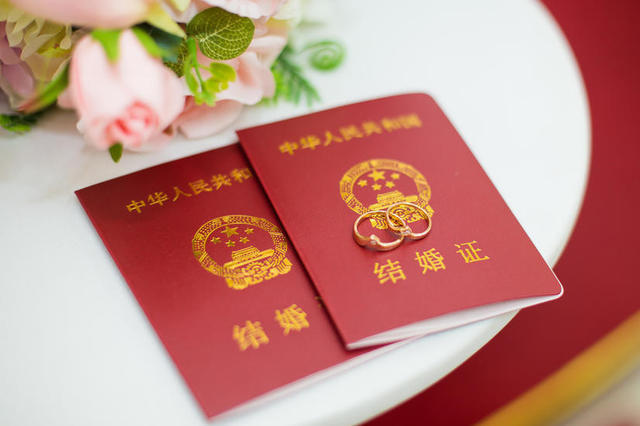
As more foreigners live, work, invest, or marry in China, questions around marital property rights have become increasingly important. One of the most overlooked legal risks in cross-border marriages is this: if you do not sign a marital property agreement in China, Chinese law will automatically decide how your assets are classified and divided.
This article explains how prenuptial and postnuptial agreements signed before or during marriage work under the PRC Civil Code, what happens if you have no agreement, how courts tend to divide property on divorce, key risks for foreigners, and how to structure a valid written arrangement.
1. Prenuptial vs postnuptial agreements in China
Under the PRC Civil Code, couples may agree on how their property is owned, managed, and divided. Both prenuptial and postnuptial instruments rest on the same core idea: spouses can contractually depart from default marital property rules, provided the agreement is in writing and legally compliant.
1.1 Prenuptial agreement (before marriage)
A prenuptial agreement in China is typically signed before marriage registration. It often addresses:
- Ownership of pre-marital assets
- Treatment of income earned after marriage
- Real estate ownership structure
- Business shares and investments
- Asset division if the marriage ends
Purpose: to clearly separate or define property ownership before entering marriage.
1.2 Postnuptial agreement (during marriage)
A postnuptial agreement is signed after registration, often when circumstances change. Common situations include a significant income gap between spouses, business or debt exposure, financial tension within the marriage, second marriages with children from prior relationships, or cross-border asset restructuring.
Purpose: to redefine how property is treated after the marriage has begun.
2. What happens if you do not sign any agreement?
This is often the most critical issue for foreigners. With no prenuptial or postnuptial agreement, Chinese law applies the statutory marital property regime under the Civil Code.
2.1 General rule: marital property is often joint
In China, many assets acquired during marriage are presumed to be joint marital property, including salaries and bonuses, business income, investment gains (for example stocks or funds—crypto-related gains may be recognized only where law and evidence support it), intellectual property income, property purchased during marriage, and certain gifts or inheritances depending on conditions.
Key rule: if an asset was acquired during marriage, it is usually treated as jointly owned unless proven otherwise.
2.2 Divorce without an agreement: how property is divided
Contrary to a common misconception, China does not mechanically apply a strict 50/50 split in every case. Courts generally take equal division as a baseline, then adjust for circumstances. Factors often include length of marriage, financial contributions, non-financial contributions (such as childcare and household labor), fault (for example infidelity or domestic violence), child-related arrangements, and concealment or improper transfer of assets.
Outcomes can include roughly equal division, or uneven splits such as 60/40 or 70/30, depending on conduct and contribution.
2.3 Pre-marital assets: not always fully insulated
Assets owned before marriage are generally personal property—for example pre-marital real estate, pre-marital savings, or shares acquired before marriage. Two recurring risks remain:
- Commingling: if pre-marital assets are mixed with marital funds, part of the value may be characterized as joint property.
- Mortgage repayment during marriage: if a pre-marital home is paid down with marital income, the other spouse may have a claim to compensation or a share of the appreciated value, depending on the facts and evidence.
2.4 Debt: joint vs personal
Under Chinese law, debts incurred for family living are often treated as joint obligations, while personal business or gambling debt may be personal—but if the use of funds is unclear, spouses can still face dispute and liability risk in practice.
3. Why foreigners in China need marital property agreements
For cross-border families, complexity is higher.
- Different legal systems: jurisdictions vary between separate-property models, community property, and hybrids. For assets located in China, Chinese law will often govern classification and division in Chinese proceedings.
- Cross-border holdings: property in China, overseas accounts, and shares in foreign or Chinese companies are harder to classify without a clear written regime.
- Language and evidence: foreign spouses may face interpretation disputes, difficulty proving ownership, and a heavy burden in litigation. A well-drafted agreement reduces uncertainty.
4. How to draft a valid prenuptial or postnuptial agreement in China
Enforceability depends on meeting legal requirements and avoiding prohibited or unenforceable terms.
4.1 Legal capacity
Both parties should be legally competent adults who enter the agreement voluntarily and sign for themselves (or through lawful representation where applicable).
4.2 Genuine consent
An agreement may be vulnerable if there was fraud or material misrepresentation, coercion or improper pressure, or a fundamental misunderstanding of material facts.
4.3 Lawful content
Examples of clauses that are often invalid or high-risk include: “whoever files for divorce loses all property”; waivers of child support obligations; disposal of third-party property; or purposes that are illegal or contrary to public order and good morals.
4.4 Written form and notarization
Notarization is not always mandatory, but it is strongly recommended because it strengthens evidentiary weight, reduces dispute over authenticity, makes the document harder to challenge, and can improve enforceability before courts.
5. When an agreement may be invalid or set aside
Even a signed document may be challenged, for example where terms are grossly unfair and one spouse is effectively stripped of basic property rights, where consent was not genuine, where the agreement rested on a fundamental mistake (such as serious errors about paternity or ownership), where required real-estate registration steps were not completed so rights of third parties or registration law are affected, or where the parties attempted to dispose of assets belonging to others.
6. Agreement vs no agreement (overview)
| Issue | No agreement (default law) | With agreement |
|---|---|---|
| Marital income | Often joint property | Can be separated or customized |
| Real estate | Often subject to statutory division rules | Can reflect agreed ownership (subject to registration rules) |
| Investments | Shared division by default if marital | Can be contractually allocated |
| Divorce outcome | Greater court discretion | Contract terms weighed if valid |
| Cross-border assets | More uncertainty | Clearer intended allocation (still subject to conflict-of-laws and enforcement abroad) |
| Litigation risk | Often higher | Often reduced if the agreement is valid and clear |
7. Key takeaway
A marital property agreement in China is not merely a “divorce planning” tool. It is a risk-management and wealth-structuring instrument that influences how assets are classified during marriage, who owns what, how division may proceed if the marriage ends, and how cross-border wealth is documented under Chinese law.
Without an agreement, the default statutory regime often treats most marital-period acquisitions as jointly owned—leaving more room for dispute and court discretion.
For foreigners in China, especially those with international assets or blended families, a properly drafted prenuptial or postnuptial agreement is among the most important legal protections available: it replaces part of that uncertainty with clarity and can materially reduce legal risk in both marriage and divorce scenarios.
If you are focused on how courts divide assets when spouses rely on statutory rules rather than only on an agreement, see how property is divided in divorce in China.
This article is general information only, not legal advice for your matter. For professional assistance, consult a PRC-licensed lawyer at Zhang&Partners.