Individual Income Tax for Foreign Residents in China: Q&A Guide
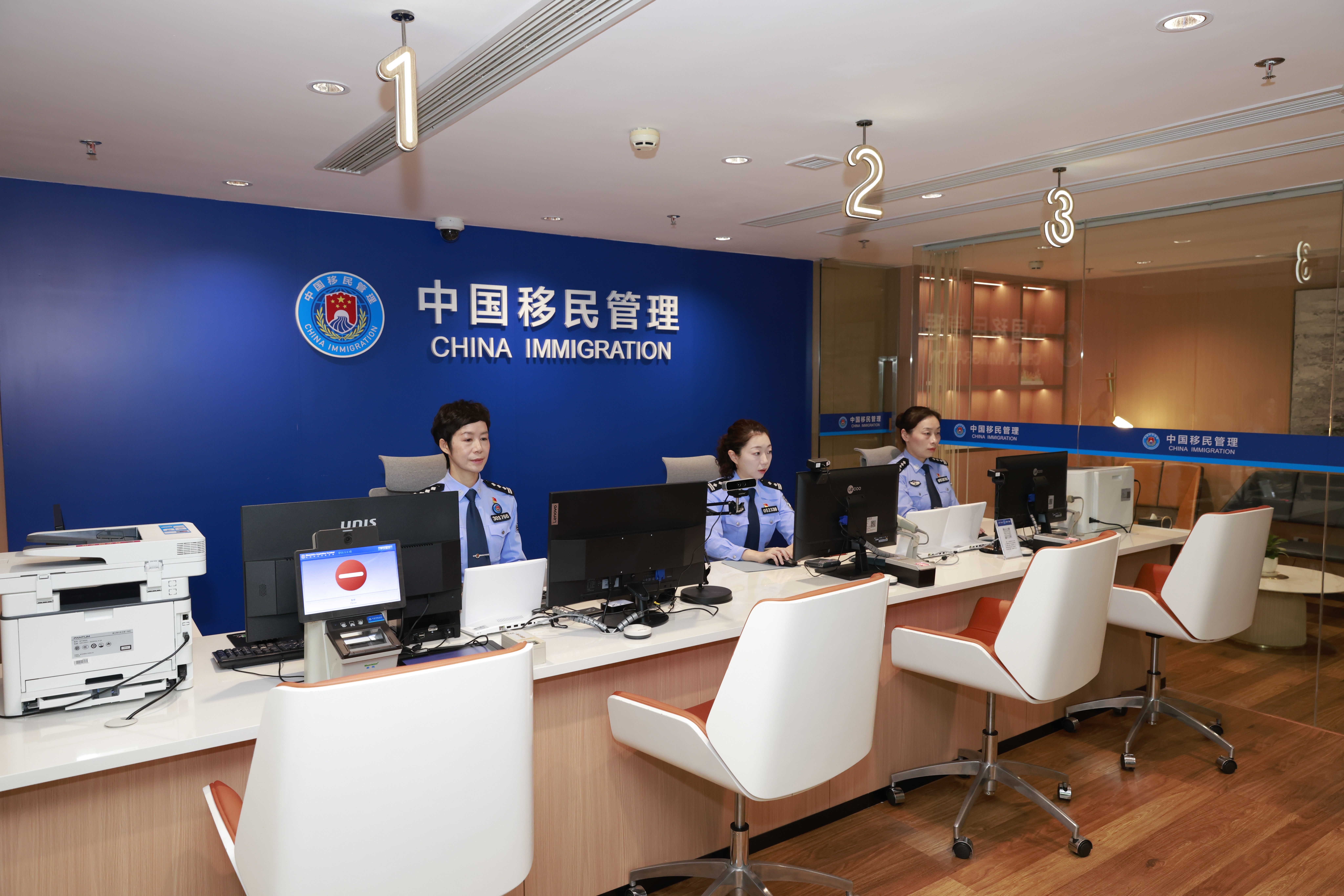
As an increasing number of foreign nationals come to China for work and residence, how to lawfully and compliantly declare and pay individual income tax (IIT) in China, and how to take full advantage of the tax relief policies permitted by law, have become matters of considerable concern for many foreign residents.
This article, presented in a question-and-answer format, outlines the key rules and practical points of China's IIT regime for foreign residents and serves as a reference for the foreign community in China.
Q1: My salary is paid by the overseas parent company, and I have agreed on a minimum salary with the China subsidiary to obtain my work visa. Is there any risk with this arrangement?
A: If the China entity declares and pays tax based on your actual circumstances, the risk of this arrangement is relatively manageable.
First, the China entity is your domestic employer. You may entrust this entity to act as your IIT withholding agent in China and to declare and pay tax on your behalf.
Second, although the majority of your salary is paid by the overseas parent company, this does not mean you are exempt from paying tax in China on that portion of your income. Your domestic employer (the China entity) is required to report to the competent tax authority information concerning the work arrangement between you and the overseas related party (the overseas parent company that pays your salary), the details of the overseas payments, and your contact information. The China entity shall disclose to the tax authority your salaries and wages derived from both domestic and overseas sources and shall, in accordance with applicable Chinese tax laws and regulations, calculate and withhold the IIT payable by you in China.
If the China entity only declares and pays tax based on the minimum salary you receive from that entity, the total salary you receive from the China entity may not correspond to your actual workload and job content, which is likely to attract the attention of the tax authorities. Should the tax authorities discover during an audit that you have failed to include the salaries and wages received from the overseas parent company in your taxable income, you will be exposed to the risk of being found to have underpaid IIT, and may face the legal consequences of having to pay the tax shortfall, late payment interest, and even administrative penalties.
Relevant Legal Basis: The Announcement on Individual Income Tax Policies for Non-resident Individuals and Non-domiciled Resident Individuals provides that where a non-domiciled individual derives income from wages and salaries sourced in China through his or her employment in China, and the domestic employer has a related-party relationship with an overseas entity or individual such that part or all of the salary that should have been paid by the domestic employer is instead paid by the overseas related party, the non-domiciled individual may either self-declare and pay tax or entrust the domestic employer to pay tax on his or her behalf. If the non-domiciled individual does not entrust the domestic employer, the domestic employer shall report the relevant information to the competent tax authority within 15 days after the end of the month in which the relevant income is paid.
Q2: If my labor contract is signed with the overseas parent company, do I still have tax obligations in China?
A: Generally, whether you have an IIT obligation in China depends on the number of consecutive or cumulative days you stay in China during a tax year (January 1 to December 31 of the calendar year). The specific rules are as follows:
1. Staying in China for 183 days or more (cumulative)
You will be classified as a resident individual and will be required to pay IIT in China on all income derived from both within and outside China.
Note: For an individual who does not have a domicile in China and has resided in China for 183 days or more cumulatively in a tax year for less than six consecutive years, his or her foreign-sourced income paid by an overseas entity or individual may be exempted from IIT upon filing with the competent tax authority. If the individual leaves China for more than 30 days on a single occasion in any given year, the consecutive-year count for the 183-day residency test shall restart.
2. Staying in China for more than 90 days but less than 183 days
You will be classified as a non-resident individual and will only be required to pay IIT on China-sourced income.
It is critical to emphasize that "China-sourced income" refers to income derived from labor services performed within China — not income "paid by an entity within China." In other words, even if your salary is paid by an overseas entity, as long as the labor services are performed within Chinese territory, that portion of income qualifies as China-sourced income and is subject to IIT in China.
Furthermore, if your country of nationality has signed an Agreement for the Avoidance of Double Taxation and the Prevention of Tax Evasion on Income with the Chinese government, you may be eligible for tax relief on a portion of your income under the relevant provisions of such agreement. The texts of these agreements are available on the website of the State Taxation Administration (www.chinatax.gov.cn).
3. Staying in China for no more than 90 days
You are only required to pay IIT in China on China-sourced income that is actually borne by a Chinese entity. China-sourced income that is paid by an overseas employer and not borne by that employer's establishment or place of business in China is exempt from IIT.
Relevant Legal Basis: Article 1 of the Individual Income Tax Law of the People's Republic of China; Articles 3, 4, and 5 of the Implementation Regulations for the Individual Income Tax Law of the People's Republic of China (2018 Revision).
Q3: If I sell my house in China, can I remit the sale proceeds to an overseas account?
A: Generally, yes, but certain formalities must be completed.
First, when you sell your house, you should use a domestic bank account in China to receive the purchase price.
If you plan to remit the sale proceeds abroad, you will need to provide the bank with the following core materials:
- An application for the outward remittance of the house sale proceeds;
- The commercial housing sale (or transfer) contract;
- Tax payment receipts evidencing full payment of taxes on the transfer of house ownership;
- Other materials sufficient to demonstrate the authenticity and completeness of the transaction.
As long as the materials provided satisfy the requirements of the bank and applicable foreign exchange regulations, you may purchase foreign exchange and effect the cross-border remittance at the bank.
It is also important to note that the house sale proceeds must be lawfully obtained and that all relevant taxes must have been paid in full.
Relevant Legal Basis: The Circular on Regulating the Administration of Foreign Exchange in the Real Estate Market provides that RMB funds acquired by a foreign individual through the sale of domestically purchased commercial housing may be used to purchase foreign exchange and be remitted abroad only after the local branch of the State Administration of Foreign Exchange has examined and verified the relevant documents.
Q4: My Chinese buyer suggests signing two contracts — one for the house sale and one for "decoration compensation" — to "save on taxes." Is this advisable?
A: This is inadvisable and carries serious legal risks.
First, it will affect your ability to remit the funds abroad. As noted in Q3, when you remit house sale proceeds abroad, you must provide tax payment receipts for the transfer of house ownership. For the so-called "decoration compensation" portion, you will be unable to furnish the corresponding tax payment receipt, making it impossible to lawfully remit that portion of the funds abroad.
Second, this constitutes tax evasion. Strictly speaking, reducing the taxable transaction amount by splitting the contract is an act of tax evasion. If discovered by the tax authorities, you will face the following consequences:
- Payment of the underpaid tax amount;
- Late payment interest at the rate of 0.05% per day on the tax shortfall, calculated from the date the tax was due;
- A penalty ranging from 50% to five times the amount of tax underpaid.
Relevant Legal Basis: Articles 32 and 64 of the Law of the People's Republic of China on the Administration of Tax Collection (2015 Revision).
Q5: As a foreign national, what IIT relief policies are available to me in China?
A: The following allowances may be exempted from IIT in accordance with the law:
- Reasonable housing subsidies, meal subsidies, and laundry allowances received in non-cash form or on a reimbursement basis;
- Relocation allowances received on a reimbursement basis upon taking up or leaving employment in China;
- Domestic and overseas business travel allowances received according to reasonable standards;
- Reimbursement of family visit travel expenses (reasonable in amount, frequency, and standard actually incurred);
- Subsidies for language training fees and children's education fees (limited to reasonable amounts actually incurred for education received within China).
Important Transition Notice: Pursuant to the relevant transition notices issued by the Ministry of Finance and the State Taxation Administration, the period from January 1, 2019, to December 31, 2021, constituted a three-year transition period. During this period, a foreign individual who met the resident individual criteria could choose either to claim the special additional deductions under the new IIT Law or to continue enjoying the tax exemption incentives for the above-mentioned allowances (housing subsidies, language training fees, children's education fees), but could not enjoy both concurrently.
Effective January 1, 2022, the tax exemption provisions ceased to apply to children's education fees, housing subsidies, and language training fees. Qualifying foreign individuals should instead claim the corresponding special additional deductions (including children's education, housing loan interest or housing rent, and continuing education). Other allowances — including family visit expenses, relocation expenses, meal subsidies, and laundry allowances — may, however, continue to be enjoyed on a tax-exempt basis in accordance with the applicable regulations.
Relevant Legal Basis: Notice of the State Administration of Taxation on Issues concerning the Implementation of an Individual Income Tax Levy or Exemption on Allowances of Foreign Individuals; Notice on Issues Relating to the Transition of Preferential Policies following the Revision of the Individual Income Tax Law.
Q6: If my employer does not provide me with any information about my tax payment, how can I verify my tax records?
A: You may visit the competent tax authority at the place where your employer is located with valid identification, and apply to check and print your individual tax payment records. The tax authority has a statutory obligation to provide tax information to the taxpayer.
Q7: How much cash may I carry when leaving China?
A:
- RMB cash: Each person may carry a maximum of RMB 20,000 in cash per entry or exit.
- Foreign currency cash: A person departing China may carry foreign currency cash not exceeding the equivalent of USD 5,000 (inclusive) without applying for a Foreign Currency Carrying Certificate, and customs will grant clearance. For amounts exceeding the equivalent of USD 5,000 up to USD 10,000 (inclusive), the person must apply to a designated foreign exchange bank for a Carrying Certificate, and customs will verify and grant clearance based on the Certificate bearing the bank's seal. In principle, carrying foreign currency cash exceeding the equivalent of USD 10,000 is not permitted. Special circumstances (e.g., large outbound delegations, long-term scientific expeditions, travel to countries experiencing war or financial instability) may warrant an application to the State Administration of Foreign Exchange for a Carrying Certificate.
Relevant Legal Basis: Announcement of the People's Bank of China [2004] No. 18; Notice of the State Administration of Foreign Exchange and the General Administration of Customs on Issuing the Interim Measures for the Administration of Entry and Exit of Foreign Currency Cash.
Conclusion
China's IIT legal framework provides systematic rules governing the tax treatment of resident and non-resident individuals, as well as domestic-sourced and foreign-sourced income. Foreign nationals living and working in China are advised to proactively understand their tax residency status and the corresponding tax obligations, and to timely either entrust their domestic employer or self-declare to the competent tax authority for compliance purposes. For significant transactions such as the sale of real property or large-value cross-border fund transfers, it is advisable to consult a professional tax lawyer or tax advisor in advance to ensure tax compliance and effectively manage legal risks.
This article is general information only, not legal advice for your matter. For professional assistance, consult a PRC-licensed lawyer at Zhang&Partners.