Freight Forwarder Disputes in China: When Goods Are Detained — Legal Remedies
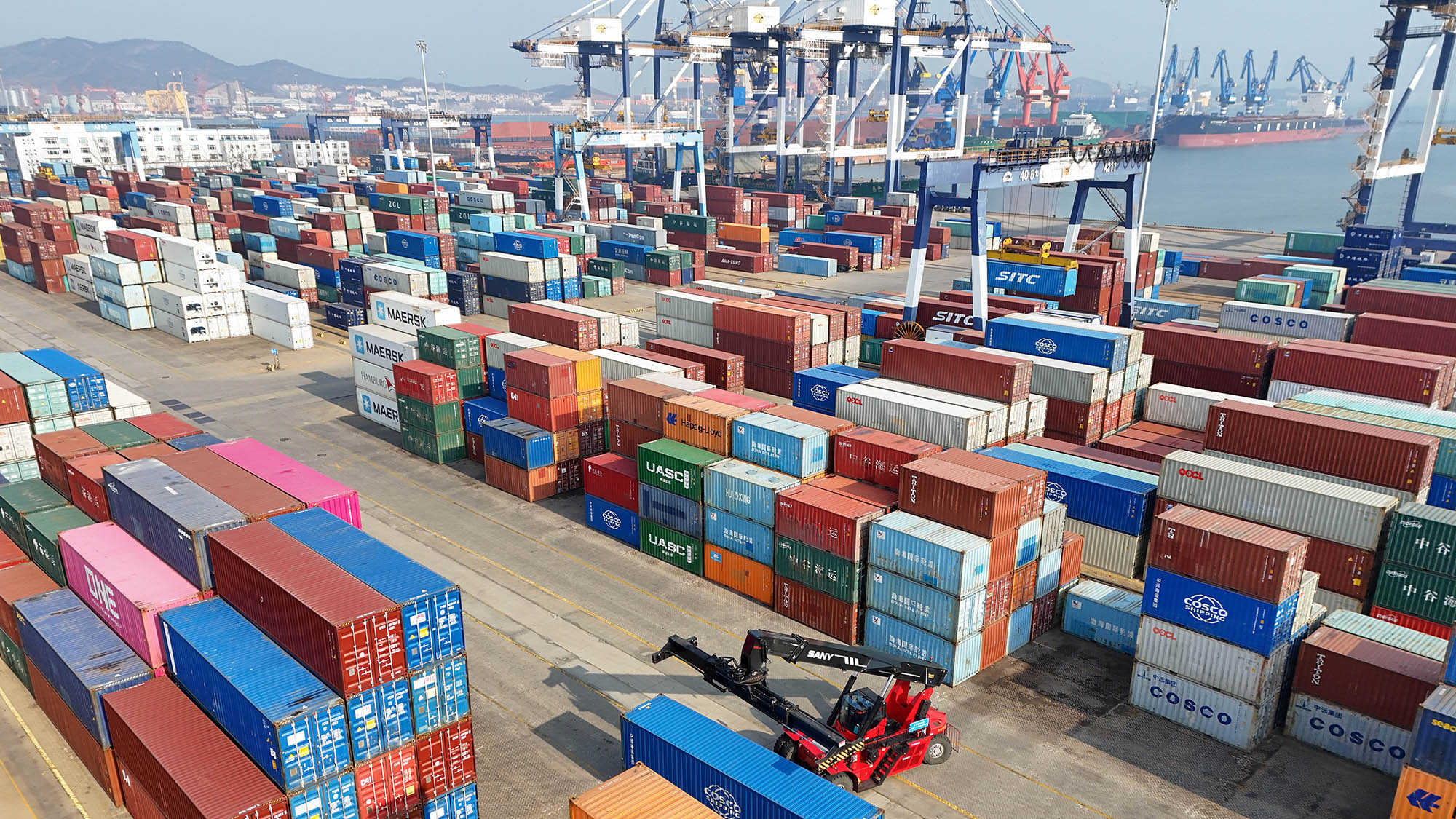
In recent years, cross-border e-commerce has grown rapidly, but the logistics segment has seen recurring risk events. When a freight forwarding company collects shipping fees and then suddenly disappears, and a downstream forwarder detains cargo to recover unpaid charges — forcing the cargo owner to sign an "apportionment agreement" under duress and later sue to rescind it — how should such chain-reaction disputes be resolved? This article examines a real case to analyze the legal issues and pathways to resolution.
1. Case Background: The Domino Effect of a "Runaway" Freight Forwarder
Beginning in June 2021, Company Fei (the cargo owner) engaged Company Hu to transport goods to an Amazon warehouse in Germany. However, in August of the same year, Company Hu suddenly disappeared (commonly referred to as "absconding") after collecting freight charges and customs clearance fees.
Company Hong, the downstream freight forwarding enterprise that actually handled the transportation and customs declaration, had accumulated over RMB 1 million in unpaid charges from Company Hu. Company Hong instructed its cooperating overseas warehouse in Belgium to detain the goods that had arrived at the port, and notified the cargo owners: they must share the costs owed by Company Hu, or the goods would not be released.
Under the pressure of having their goods detained, Company Fei and other cargo owners entered into a Debt Settlement Agreement with Company Hong, under which Company Fei agreed to pay RMB 89,798.99 in shared costs, after which Company Hong would complete the final delivery. Company Fei made the payment, and the goods were released and delivered.
Subsequently, however, Company Fei took the position that it had signed the agreement under duress (i.e., the threat of continued detention of its goods) and brought suit in court, seeking rescission of the agreement and restitution of the amount paid.
2. Issues in Dispute: Lawful Lien or Coerced Agreement?
The core controversy centered on two competing characterizations:
Company Hong's position: Its detention of the goods was an exercise of the right of lien under the Civil Code, and the agreement was the product of voluntary negotiation between the parties, not coercion.
The cargo owners' position: Company Hong used the threat of non-release of goods to compel the cargo owners to sign an apportionment agreement under unfair conditions, and the agreement should be rescinded in accordance with the law.
It is worth noting that multiple cargo owners filed suit in the wake of the same absconding event, resulting in a significant cumulative amount in dispute and wide-ranging impact.
3. The Court's Approach: Looking Beyond the Case File for an Optimal Resolution
Upon hearing the case, the Guangzhou Maritime Court recognized that the disputes between Company Hong and the various cargo owners all traced back to a single root cause — Company Hu's absconding. In essence, both sides were victims of the same event.
The court was keenly aware that simply adjudicating each case on its individual merits and issuing a conventional judgment might not only fail to achieve final resolution but could also further inflame the conflict between the parties. The court therefore adopted the following strategy:
- Active communication: It built bridges for dialogue, engaging proactively with all parties — including the overseas warehouse operator in Belgium.
- Legal analysis and persuasion: Rather than rushing to judgment, the court guided the parties back to a rational perspective through detailed legal analysis and discussion of similar cases.
- Key realizations facilitated: The true source of the problem was the absconding Company Hu, not the conflict between the detaining forwarder and the cargo owners; engaging in legal disputes over whether the detention was lawful or the agreement was coerced carried significant uncertainty; a prolonged litigation battle would result only in a lose-lose outcome — goods stranded overseas, with storage fees and other losses mounting daily.
After multiple rounds of patient mediation, the court brokered a settlement between Company Hong and the various cargo owners:
- Company Hong, on behalf of the overseas warehouse, would first return 30% of the shared payments to the cargo owners to address their immediate needs;
- The remaining amount would be returned to the cargo owners on a pro rata basis after Company Hong successfully pursued recovery against Company Hu.
4. Significance of the Case
Against the backdrop of rising logistics costs, ongoing geopolitical conflicts, tightening platform compliance requirements, and increasingly stringent customs policies, the cross-border e-commerce logistics sector has seen a growing number of risk events in which freight forwarders solicit business at low prices and then abscond. Particularly when freight forwarding involves multiple layers of sub-contracting, the disappearance of an upstream forwarder readily triggers a chain reaction of disputes involving downstream forwarders and overseas warehouses detaining goods.
The significance of this case lies in the following:
- Balancing of interests: The court focused on balancing the interests of all parties rather than mechanically applying a particular legal provision, and proactively guided the cargo owners and the overseas warehouse operator to reach a mutual understanding.
- Loss minimization: The settlement achieved loss minimization for all parties — recovering a portion of the cargo owners' direct losses while preserving the downstream forwarder's right to pursue further recovery.
- From confrontation to cooperation: The parties were guided from confrontation toward cooperation, achieving a pragmatic resolution featuring loss-sharing and mutual support in difficult circumstances.
- Model for alternative dispute resolution: This case provides a reference for non-litigation resolution pathways in similar disputes within the cross-border e-commerce logistics sector, producing favorable legal and social outcomes.
This article is a case introduction for general informational purposes only and does not constitute legal advice. For specific legal disputes, it is recommended to consult a qualified Chinese lawyer.
This article is general information only, not legal advice for your matter. For professional assistance, consult a PRC-licensed lawyer at Zhang&Partners.