Enforcing Foreign Judgments and Arbitral Awards in China: A 2026 Practical Guide
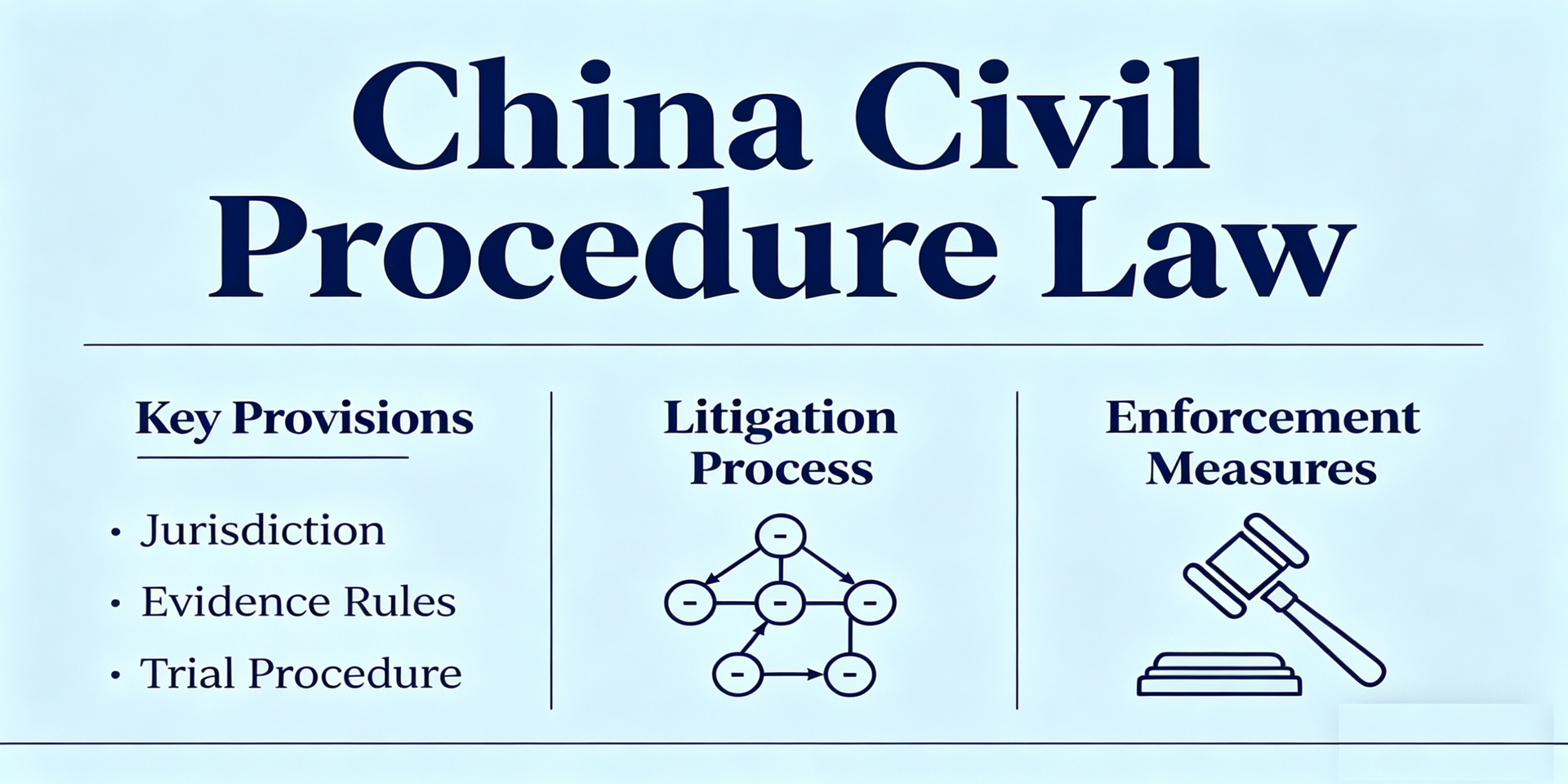
Winning a lawsuit or an arbitration abroad is often only the first half of the battle. If your debtor's assets—bank accounts, real estate, or inventory—are located in China, you must navigate the formal process of recognition and enforcement.
In the current 2026 legal climate, China has become increasingly receptive to foreign awards, provided the procedural requirements are met with precision. Here is how to turn your foreign legal paper into tangible recovery. See also property preservation in China.
1. Foreign Court Judgments: The Principle of Reciprocity
Foreign court judgments do not automatically take effect in China. They must be reviewed and recognized by an Intermediate People's Court before they can be enforced.
Channels for application
- Direct application: The party can apply directly to the Intermediate People's Court where the debtor is domiciled or where the property is located.
- Judicial assistance: The foreign court may request assistance from the Chinese court based on international treaties or the principle of reciprocity.
The criteria for success
Chinese courts review these applications based on:
- International treaties: Whether a bilateral judicial assistance treaty exists between China and the rendering country.
- Reciprocity: In the absence of a treaty, China looks for reciprocal relations.
Note: In recent years, China has significantly lowered the threshold for reciprocity, making it much easier to enforce judgments from major trading partners even without a formal treaty.
The red lines (grounds for refusal)
A court will refuse recognition if the judgment:
- Violates the basic principles of Chinese law.
- Endangers China's sovereignty, security, or public interests.
- Violates procedural justice (for example, the defendant was not properly summoned).
2. Foreign Arbitral Awards: The Green Channel
Enforcing a foreign commercial arbitral award is generally more straightforward than a court judgment, thanks to the New York Convention.
The New York Convention framework
Since China is a member of the New York Convention on the Recognition and Enforcement of Foreign Arbitral Awards, it applies to awards made in the territory of another contracting state (including the US, UK, Germany, Singapore, and others).
Why arbitration is preferred
- Uniform standards: Courts follow the strict, pro-enforcement standards of the Convention.
- The reporting system: To prevent local protectionism, an intermediate court in China cannot refuse to enforce a foreign arbitral award without prior approval from the Supreme People's Court. This provides a high degree of certainty for international creditors.
3. Tactical Advice for Creditors
Secure assets immediately (property preservation): The moment you apply for recognition, you should simultaneously apply for property preservation. This allows the court to freeze the debtor's Chinese bank accounts or seize their assets while the recognition process is ongoing. Without this, the assets may disappear by the time the court issues its final ruling.
The two-year limitation: The time limit for applying for the recognition and enforcement of a foreign judgment or award is two years. This period starts from the last day of the performance period specified in the legal document.
Translation and formalities: All documents must be accompanied by accurate Chinese translations. Furthermore, original judgments or awards usually require notarization and an Apostille (or consular authentication for non-Apostille countries).
Conclusion
For international traders, commercial arbitration remains the safest and most predictable route for cross-border dispute resolution due to the global protection of the New York Convention. However, as China continues to expand its judicial cooperation, enforcing court judgments is becoming a more viable reality.
This article is general information only, not legal advice for your matter. For professional assistance, consult a PRC-licensed lawyer at Zhang&Partners.