China Customs Inspection: Key Details and Practical Guidance for Importers and Exporters
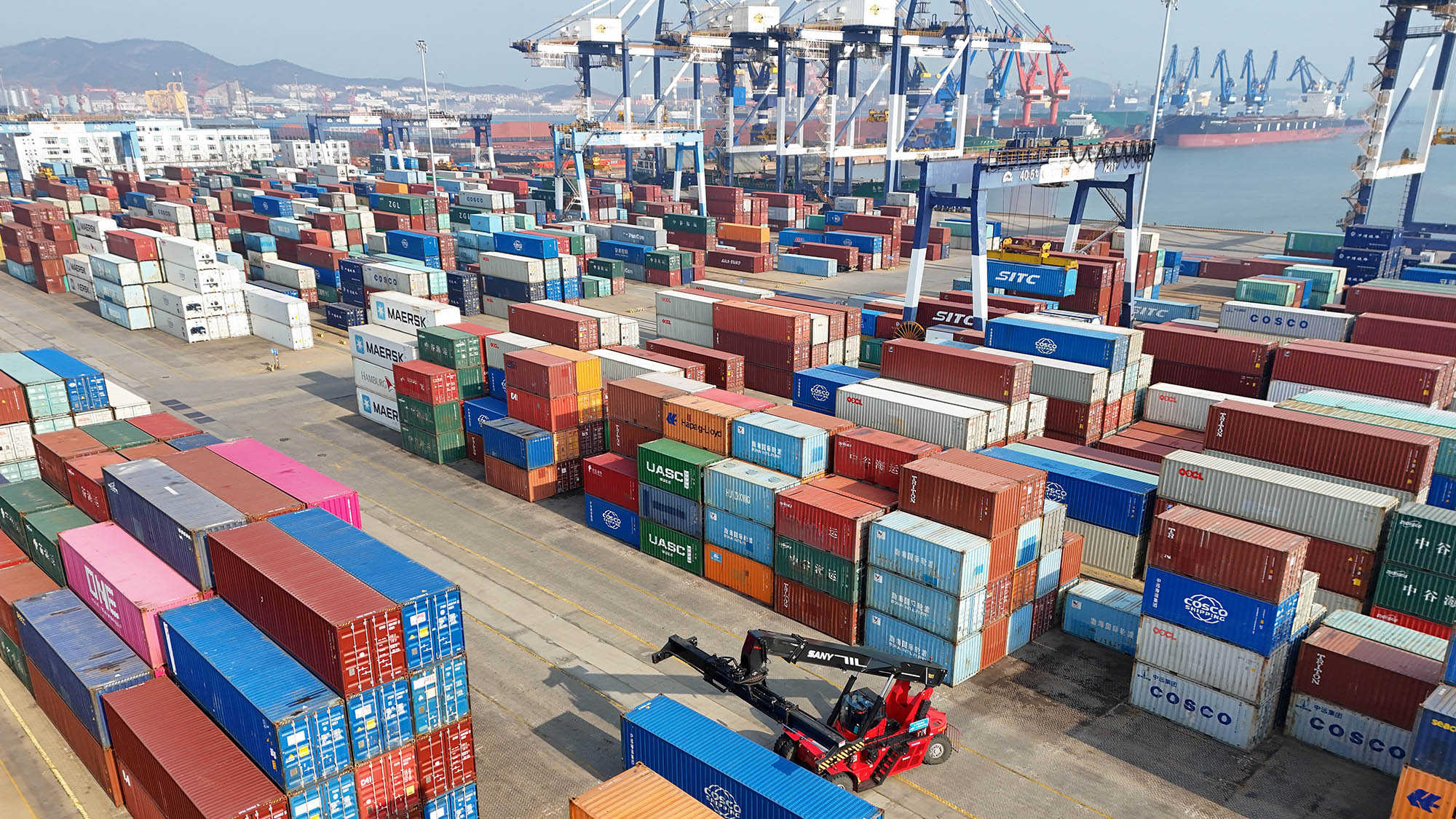
In international trade, customs inspection is an integral part of the clearance process when goods enter or exit China's customs territory. For foreign businesses and individuals seeking to export goods to China or import goods from China, understanding the fundamental framework, operating procedures, and common issues associated with China's customs inspection system is essential for proactive compliance and effective risk management.
1. What Is Customs Inspection
Customs inspection refers to the administrative enforcement action whereby Chinese customs authorities, after accepting a declaration filed by the consignee, consignor, or their agent, conduct a physical examination of the inbound or outbound goods to verify whether their nature, origin, actual condition, quantity, and value correspond with the particulars stated in the customs declaration documents.
Customs inspection is a statutory power vested in customs authorities by the State. Its fundamental objectives are:
- To verify whether the actual import or export goods correspond with the customs declaration documents, and to detect instances of under-declaration, false declaration, misrepresentation, or other irregularities that may not be uncovered during the document review stage;
- To verify issues flagged during the document review stage and provide a reliable regulatory basis for subsequent tax assessment, trade statistics compilation, and customs supervision.
2. Who Bears the Costs of Customs Inspection
In practice, customs authorities do not charge any fees for the inspection itself. However, because inspection operations are typically carried out at ports, terminals, and other customs-supervised areas, port operators need to provide container lifting, devanning, loading, sealing, and related services. The resulting operational costs (e.g., container lifting fees, devanning fees) are charged by the port operator to the cargo owner or its agent. While these charges are often referred to colloquially as "customs inspection fees," they are, in substance, port service charges, for which the port operator issues formal invoices. Generally, these costs are borne by the shipper.
3. The Customs Inspection Process
- Issuance of Inspection Order: Once customs determines that inspection is required, the on-site document acceptance officer prints the Inspection Notice and, where necessary, prepares a sealed inspection file for delivery to the customs broker.
- Scheduling the Inspection: The on-site customs inspection office arranges a specific time for the inspection. Typically, the inspection plan for the following day is scheduled on the same day.
- On-Site Cooperation Obligation: During customs inspection, the consignee of imported goods, the consignor of exported goods, or their authorized customs broker must be present and assist in moving the goods and unpacking and repacking the goods. Where customs deems it necessary, it may conduct the inspection, re-inspection, or sample collection on its own authority.
- Confirmation of Inspection Results: Upon completion of the inspection, the accompanying person shall sign and confirm the Inspection Record.
The customs inspection department must complete the inspection and provide the inspection results within 48 hours from the time the inspection is accepted. For export goods, release shall be granted within half a working day after the inspection is completed. Notably, where suspected smuggling or other violations are discovered during the inspection, the foregoing time limits do not apply.
4. Primary Modes of Customs Inspection
Depending on the type of goods, risk profile, and supervisory needs, customs authorities may adopt any of the following three inspection modes:
- Comprehensive Inspection: Goods are opened and inspected on a piece-by-piece basis. The variety, specifications, quantity, weight, origin, and other particulars of the goods are verified item by item against the customs declaration.
- Random Inspection: A certain proportion of goods is selectively opened and inspected. The extent of unloading and the proportion of boxes opened are determined by the requirements of the inspection directive with respect to verifying product description, specifications, quantity, weight, and other key elements.
- External Visual Inspection: The external packaging, marks, and trademarks of the goods are visually inspected. This mode is generally applicable to large machinery, bulk raw materials, and other goods that are difficult to handle or move.
In addition, customs authorities extensively utilize technological tools such as weighbridges and X-ray machines to enhance inspection efficiency and accuracy.
Customs inspection is generally conducted at import and export ports, terminals, railway stations, airports, post offices, or other customs-supervised areas within the customs supervision zone. For bulk cargo, dangerous goods, perishable goods, and other special categories of goods, customs may, upon application by the consignee or consignor, conduct the inspection at the operating site. Under special circumstances, upon application by the consignee, consignor, or their agent and with customs approval, customs may also dispatch officers to conduct the inspection at factories, warehouses, or construction sites located outside the customs supervision zone.
5. Common Declaration Errors Identified During Inspection
Based on practical experience, the following are the most frequently encountered issues during customs inspections:
- Product Name Verification: Common errors include confusing scientific names with colloquial names, and discrepancies between Chinese and English product names arising from polysemy in English terms.
- Specifications Verification: Errors frequently occur when carton packaging specifications are mistakenly entered as product specifications, when multiple specification variants exist but are not fully declared, or when irregularly shaped products have two different length measurements that are conflated.
- Quantity Verification: Under-declaration of total quantity is relatively common, particularly for goods eligible for export tax rebates. A principal cause is that customs declaration documents are prepared in advance and not updated when container loading data changes.
- Weight Verification: For bulk cargo, a variance in gross or net weight exceeding 3% to 5% of the actual weight is likely to attract customs scrutiny. Furthermore, if the weight stated on the declaration form differs from the weight indicated on the shipping marks printed on the cartons themselves, customs may deem the declaration inaccurate without even opening the container for weighing.
- Package Count Verification: It is common for tail-end cartons, samples, and complimentary items to be inadvertently omitted from the total package count.
- Shipping Marks Verification: Where product information or logos are present on the external packaging but not reflected in the customs declaration, discrepancies may arise during inspection.
- Intellectual Property Infringement Screening: Customs verifies whether goods infringe upon the trademark rights, patent rights, or other IP rights of third parties. Well-known brands, counterfeits, factory brands, hang tags, registered trademark symbols, and logos must all be carefully distinguished.
- Origin Verification: The place of origin must be accurately declared. This is particularly important in triangular trade scenarios (e.g., a Singaporean company purchasing goods from China for resale to a Russian buyer), where incorrect origin information may prevent customs clearance at the destination country.
- HS Code Classification Verification: Classification of multi-functional products is a common pitfall. For example, a tablet computer with calling functionality should be classified as a mobile phone rather than as a standard tablet.
- New-versus-Used Classification: China imposes strict controls on the export of used goods. Machinery transported on flat-rack or open-top containers that has been exposed to rain during transit may be misidentified as used goods. In the case of relocation or immigration shipments, many items are inherently used and must be declared accordingly.
- Price Verification: Customs maintains a reference price range for each HS code category in its system, including both local port price ranges and national price ceilings/floors. Price scrutiny is particularly stringent for imports.
- Sampling and Laboratory Testing: This typically applies to chemical products and other specialized goods whose nature cannot be determined by visual inspection alone and requires laboratory analysis.
- Vehicle and Container Inspection: This includes inspection of cargo trucks involved in cross-border transport between mainland China and Hong Kong, as well as inspection of specialized container types.
- Concealed Goods Detection: Customs inspects for undeclared or omitted items concealed within the shipment. In practice, the range of concealed items discovered is extensive and includes food products, consumer electronics, books, and other goods.
6. Practical Recommendations for Foreign Businesses
To minimize customs inspection risks and ensure smooth clearance, foreign businesses engaged in import and export trade with China are advised to observe the following:
- Ensure that customs declaration information corresponds accurately with the actual condition of the goods, and promptly update declaration data after container loading;
- Carefully verify key declaration elements, including product name, specifications, quantity, weight, place of origin, and HS code classification;
- Respect third-party intellectual property rights and refrain from importing or exporting infringing goods;
- When entering into trade contracts, clearly stipulate which party bears the costs associated with customs inspection;
- Maintain a complete chain of trade documentation for presentation to customs authorities when required.
Customs inspection is a necessary regulatory measure for safeguarding national trade order and the public interest. By establishing a robust internal compliance system, foreign businesses engaged in trade with China can effectively reduce clearance uncertainties and ensure the smooth operation of their trade activities.
This article is general information only, not legal advice for your matter. For professional assistance, consult a PRC-licensed lawyer at Zhang&Partners.